
Reviews
Part of Running a small clothing repair studio involves more than sewing
Buying repair materials in quantity without guessing, updated for 2027
Clothing repair studios materials: how a workroom should stock thread and patch fabric, what an invoice must tell you, why elastic content is disclosed oddly.
Buying repair materials in quantity is different from buying for one project. You stock against jobs that have not arrived yet, buying by property rather than appearance, and keeping enough record that a repeat order actually repeats.
What to take away
- Stock by weight and fiber, not by color. Color is the last variable and the least predictable.
- Fabric bought unfinished or in bulk may carry its fiber content on an invoice rather than a label. Keep the invoice.
- Elastic content is disclosed differently from other fibers, and it changes how a fabric handles.
- Record what you bought and how it behaved, or you will re-learn it every year.
Buy by property
A useful workroom stock has four axes: fiber, weight, weave or knit structure, and color. Cover the first three properly and treat color as opportunistic. A workroom stocked by fiber, weight and structure can add services without new equipment, as these clothing repair studios ideas worth trying show.
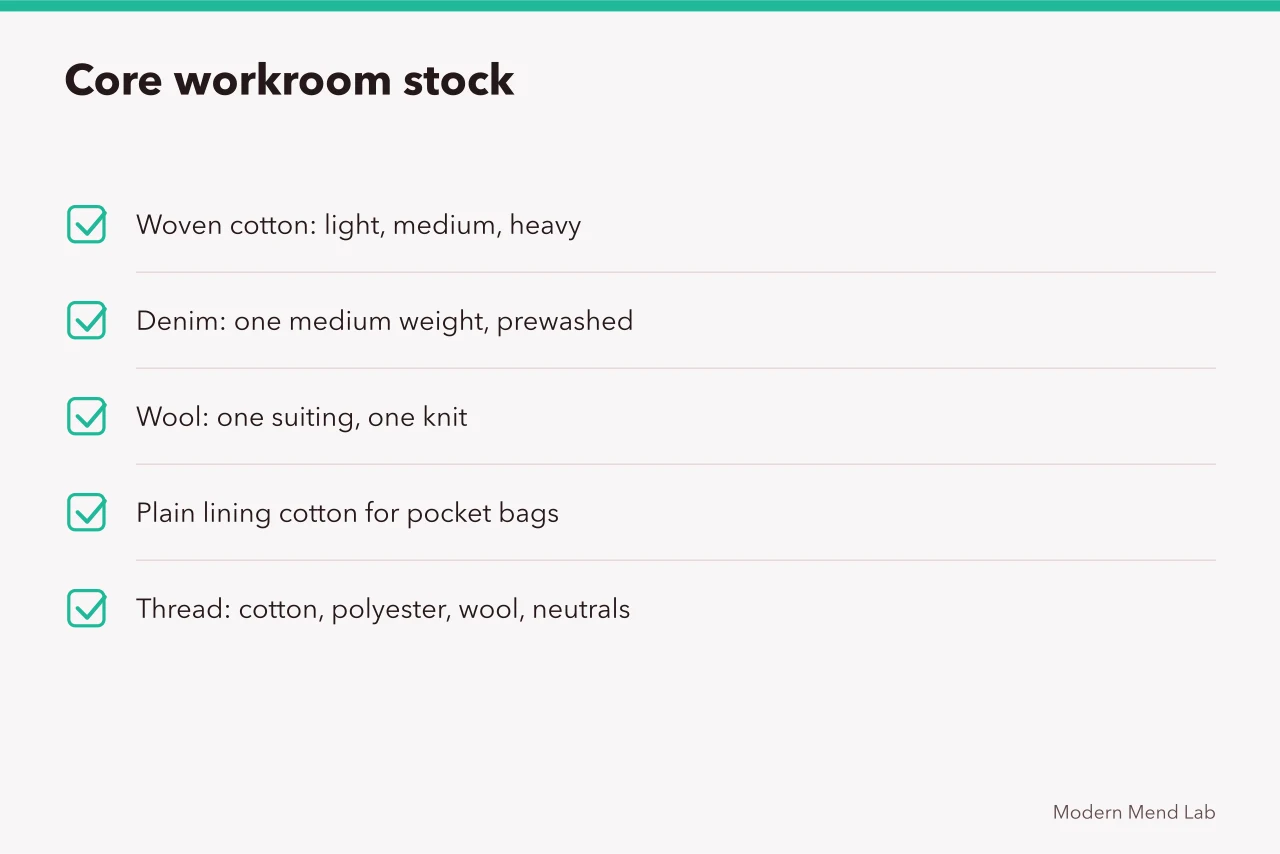
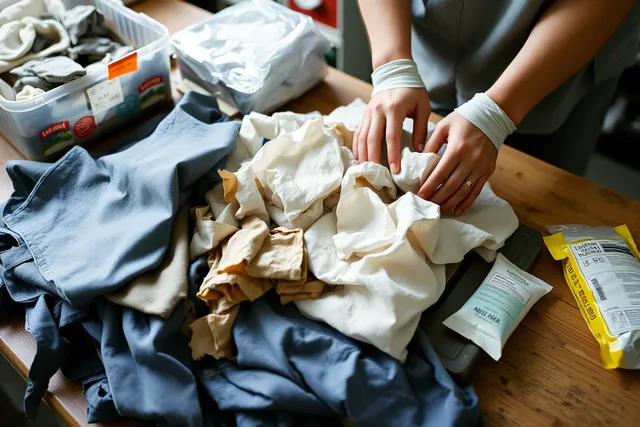
- Woven cotton in light, medium and heavy weights
- Denim in one medium weight, prewashed
- Wool in one suiting weight and one knit
- Plain lining cotton for pocket bags
- Thread in cotton, polyester and wool, in neutrals plus black and white
That is a small stock and it answers most incoming work. Everything beyond it should be bought against a specific job.
Neutral means gray, ecru and mid-brown as well as black and white. Those three do more matching work than any bright color, because most worn clothing has faded toward them.
When there is no label, there should be an invoice
Bulk or intermediate fabric often arrives without a consumer label. The invoice in lieu of label rule covers that case.
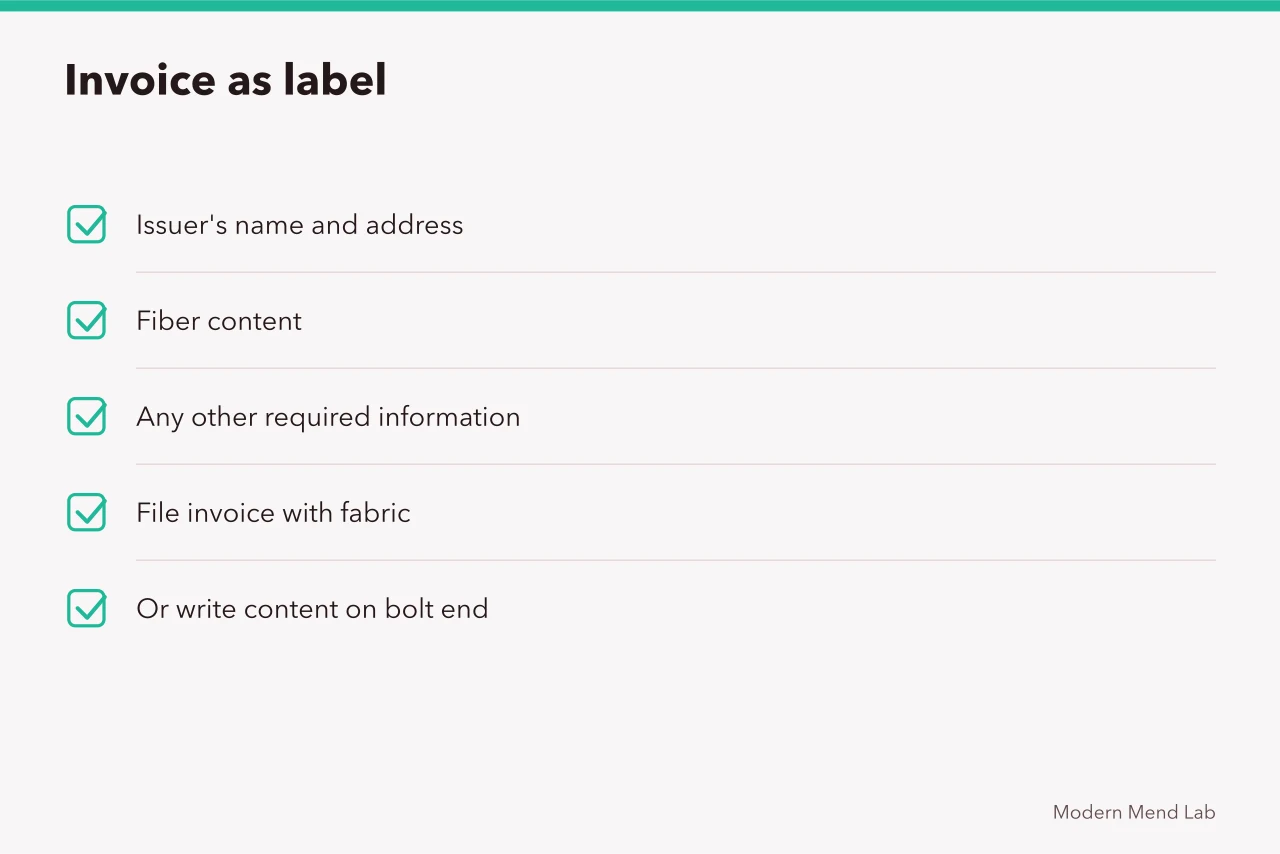
For a textile fiber product not in the form intended for ultimate consumer sale, an invoice or other document may replace a label. It must show the issuer's name and address, fiber content, and any other required information.
So the paperwork is the label. File the invoice with the fabric, or write the content onto the bolt end yourself, for the roll on the shelf will be anonymous in six months. Labeling every roll also matters when you repair clothes for other people, since a customer may ask what fiber you used.
Elastic content is a special case
Stretch fabrics get different descriptions, which matters for matching a patch. Under the rule on fiber content of special types of products, a textile product made wholly of elastic yarn is identified by the elastomer percentage.
The same applies to elastic material with minor non-elastic parts for structural purposes. That disclosure also gives percentages of all textile coverings of the elastomer and other yarns used.
Where a product is part elastic and part other fabric, the content is set out sectionally by percentages. A sectional disclosure tells you the garment has two different fabrics with two different behaviors. Stock and patch accordingly.
Keep a materials log
One line per purchase: what it is, where it came from, what it cost, and a note on how it behaved once used. Shrinkage, fray, needle resistance, colorfastness.
That log separates a stock you understand from a shelf you re-test every time. It also makes the material choices for individual repairs faster, and it feeds the pricing described in what running a studio involves.
Common questions
How much of any one fabric should I hold? Enough for three or four typical jobs. Beyond that you are betting on demand you cannot predict.
Should I prewash bulk fabric on arrival? Yes, at the hottest temperature you would ever subject it to. It is easier to do once on a whole piece than repeatedly on cut patches.
Is it worth buying from garment offcuts? Often, and it is cheap. The trade is unknown or partly known content, so test before it goes into a customer's garment.
What thread weights does a workroom need? All-purpose for most work, topstitching weight for visible repair and denim, and a fine weight for lightweight and delicate fabric.