Maintenance
Part of Running a small clothing repair studio involves more than sewing
Which mistakes turn a home repair workroom into a problem
The errors that appear once repair becomes regular work: pressing over chemical residue, unclear labeling of your own stock, and treating volume as practice.
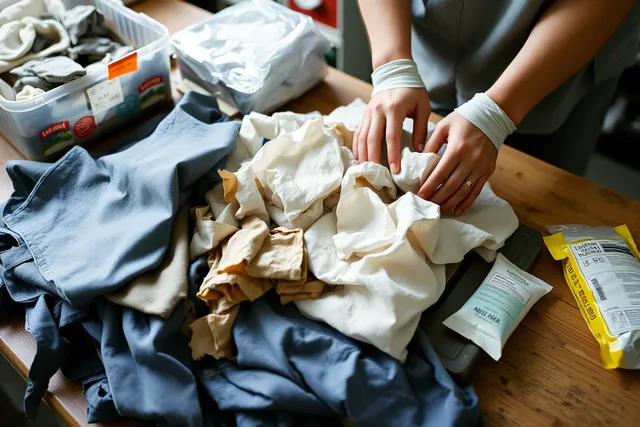
A home workroom fails differently from a home repair. The technique is usually fine by this point. What goes wrong is process: stock nobody can identify, garments handled in the wrong order, and heat applied to something that should never have met an iron.
What to take away
- Never press over a deodorant or antiperspirant residue. Heat and those chemicals together ruin fabric.
- Label your own stock properly. Abbreviations and shorthand stop making sense within a year.
- Volume is not practice. Doing the same repair badly forty times teaches nothing.
- Do the intake record before the work, every time, including for your own garments.
The pressing mistake
Pressing finishes almost every repair, and it is where chemical residue becomes permanent damage. Extension guidance on antiperspirant and deodorant stains opens with a warning: never iron or apply heat to a deodorant stain, because chemical and heat interaction ruins most fabrics.
A workroom that repairs clothes for other people must also track which treatments were already applied before heat.
It also notes that deodorants containing substances such as aluminum chloride are acidic and can change the color of some dyes. Ammonia on new stains or white vinegar on old ones may restore the color.
The workroom rule that follows is simple: underarm areas get inspected and treated before anything hot touches the garment. The same caution applies to any stain of unknown origin on a garment that arrived from someone else, since you do not know what has already been applied to it at home.
Label your stock like it is going to a stranger
Shorthand you invent while filing fabric is unreadable within a year. Textile labeling has the same problem, so the rules ban shortcuts.
Under the rule prohibiting abbreviations, ditto marks and asterisks, required information may not be designated by ditto marks or placed in footnotes referred to by asterisks or other symbols. It may not be abbreviated except in one narrow permitted case.
The rule exists because those devices lose their meaning away from the page that explains them. So does your own filing. Write cotton, not C. Write medium weight woven, not MW.
The other repeats
- Working through a queue by arrival order rather than by drying, pressing and setting time
- Storing customer garments in the same place as your own fabric stock
- Skipping the intake photograph on small jobs, which are exactly the jobs that get disputed
- Doing all the cutting for a week in one session
- Assuming volume improves technique without any feedback loop
Volume is not practice
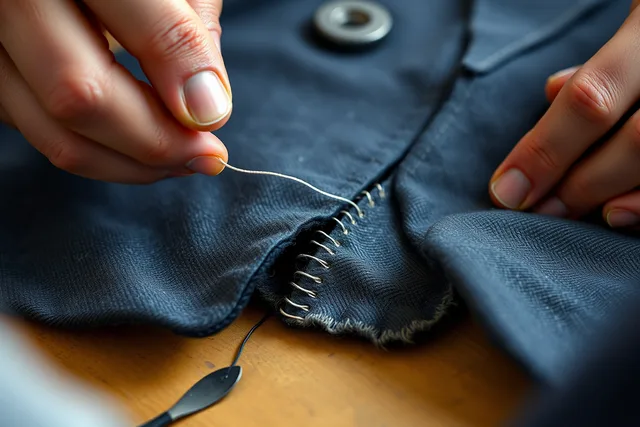
Practice needs a comparison and a correction. Forty hems in a week with nobody looking at them produces forty hems at whatever standard you already had. Deliberately vary one thing occasionally and look at the result, or take work to someone who will tell you what is wrong.
The workroom version of this is to keep one sample of your own work from each month and compare across the year. It costs a scrap of fabric and it is the only feedback available to someone working alone.
The structural errors underneath these are covered in the failure patterns, and the process side is easier once the intake and record habits are in place.
Common questions
What if a garment arrives with an old deodorant stain already set? Say so at intake and record it. Some are permanent, and discovering that after pressing makes it look like your damage.
How should customer garments be stored while waiting? Hanging, covered, away from your own stock, and away from anything that might mark them. Bag anything that has been treated.
Is it worth photographing small jobs? Yes. Buttons and hems are cheap jobs and generate a disproportionate share of disagreements, because expectations were never stated.
How do I keep improving once the work is routine? Build one deliberate comparison into each week, and get an outside opinion on a finished job every few months.