Guides
Part of Needles, blades and irons: how mending tools fail, and what it costs
Weekly, monthly and yearly: a routine guide for a mending tool kit
A weekly, monthly and yearly routine for tools and stock: what to wipe, what to roll rather than fold, and what to check before it becomes a problem.
Kits do not decay evenly. Some things need attention after every session, some once a season, and some once a year. Splitting the routine that way means the whole thing takes a few minutes at a time rather than an afternoon nobody schedules.
What to take away
- After every sessionwipe steel, close the tin, put the current project back in its bag.
- Monthlycheck needles, check the pressing cover, look at the thread you use most.
- Yearlyopen everything, discard what has degraded, and note what you never touched.
- Long pieces of fabric should be rolled rather than folded, because creases become weak lines.
After every session
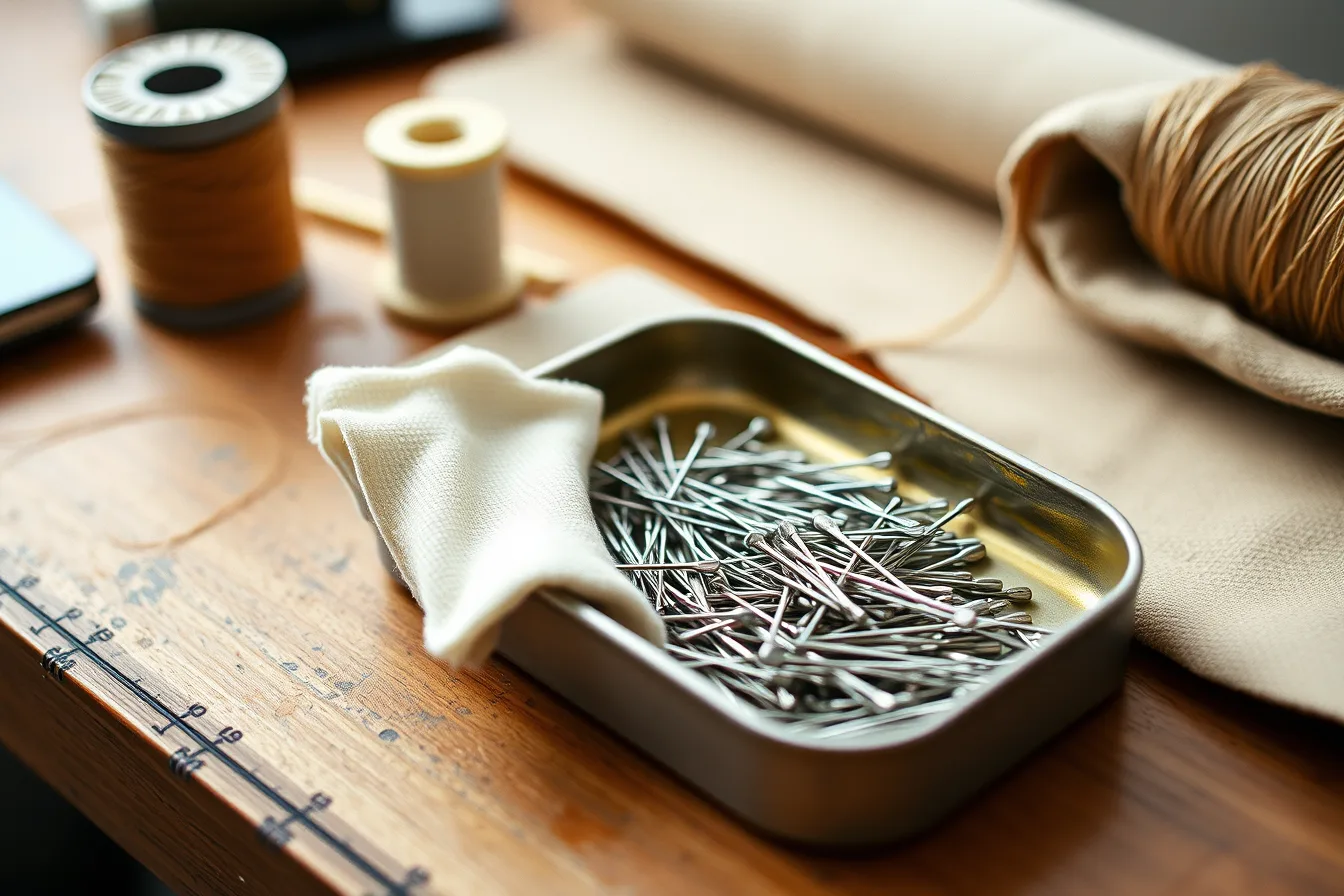
Three actions, under a minute. Wipe steel with a dry cloth, because skin oils and humidity start corrosion. Close the needle tin. Return the current project to its bag so an unfinished repair does not spread and get tidied away in pieces.
The wipe is the one that matters most and the one people skip.
Monthly
- Run a fingernail down each hand needle. A burr you can feel is a snag in the making.
- Look at the pressing cover for marks, and wash it if in doubt.
- Pull a length of your most-used thread and break it, to confirm it is sound.
- Check the mat for grooves deep enough to steer a blade.
Ten minutes, and it catches almost everything before the work suffers.
Roll long fabric, do not fold it
Anything long enough to fold repeatedly should be rolled instead. Creases become permanent weak lines, and in old textiles they eventually split.
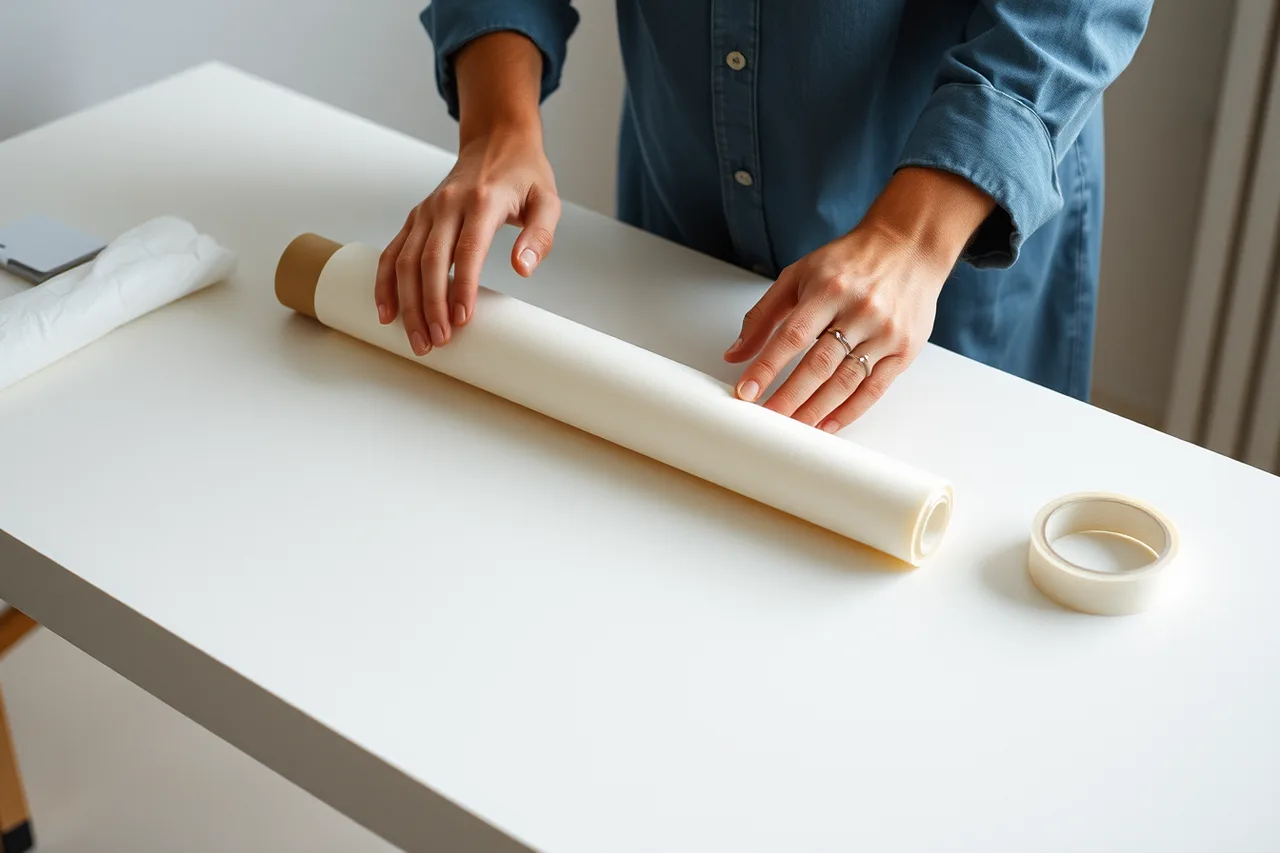
The museum method is instructive. The National Park Service leaflet on flag rolling and storage describes it: roll on an archival tube to avoid creases common on folded flags.
Use a three-inch tube for most flags, or four to six inches for very long ones. Add acid-free unbuffered tissue, undyed cotton twill tape and prewashed undyed muslin.
The tube should be six inches longer than the widest vertical edge. The method is not for silk flags in poor condition.
For a mending stock the household version is a cardboard tube covered in washed cotton, tied with cotton tape.
Yearly
Empty every container. Discard rusted pins, brittle thread and fabric that has gone weak. Wash the covers. Write down what you did not touch all year, because that is either the wrong material for your wardrobe or stored somewhere you forget.
Then check the storage conditions themselves. Damp destroys more than use does, and it does so quietly. A container that produced a problem once will do it again in the same place. That argument is made at more length in storing supplies after something has gone wrong.
If the open-up reveals live insects rather than damp, sealing the box is not enough.
The National Park Service leaflet on anoxic microenvironments describes the treatment used instead of toxic fumigants. Infested objects are held in an oxygen-free environment built from heat-sealable barrier films and oxygen absorbers.
It warns that the oxygen levels needed to kill insects are so low the enclosure must be carefully designed to work at all.
The household reading is not to build one. It is that half-measures do not kill insects, so an infested box needs a real treatment or discarding.
Keep the routine written down
A card taped inside the lid of the kit box, listing the three timescales, is enough. A routine that lives only in your intentions is one that happens twice.
The underlying failure modes are described in how mending tools fail, which is worth reading once so the routine makes sense rather than feeling like housekeeping.