Reviews
Part of Needles, blades and irons: how mending tools fail, and what it costs
Cutting and pressing surfaces for a mending kit, compared for wear
Surfaces wear tools as much as tools wear surfaces. Choosing a cutting base, a pressing surface, and a floor that does not off-gas into your fabric stock.
Cutting and pressing surfaces for a mending kit wear tools in different ways. A glass table dulls shears in a month. A pressing surface with wax on it transfers the wax into the next garment. The floor under it all affects the fabric stored nearby.
What to take away
- Cut on something softer than the blade. Glass, stone, and metal destroy scissor edges and can chip a rotary blade. An Olfa or Fiskars self-healing mat costs less than a new pair of shears.
- Keep the pressing surface clean and its cover washable, because everything on it transfers. Brabantia and Polder covers come off for washing.
- Wax and adhesive residue on an iron or board are removable, and easier before they bake in.
- Floor coverings can off-gas into a room where fabric is stored, which matters in a small space. Look for Carpet and Rug Institute Green Label Plus.
- This guide names Olfa, Fiskars, Dritz, and Dahle mats. It also names John Boos, Anchor Hocking, and The Gypsy Quilter.
Cutting surfaces: named mats and boards
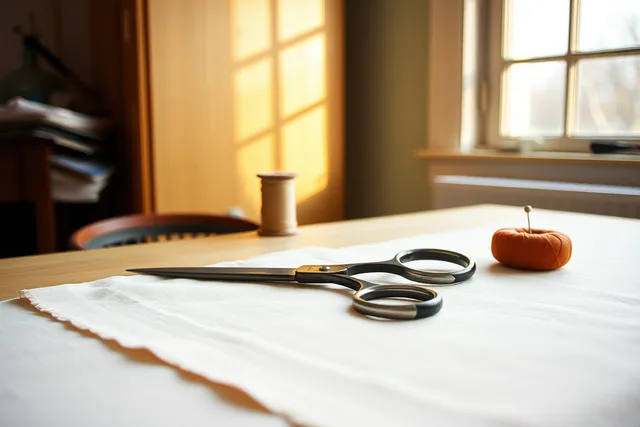
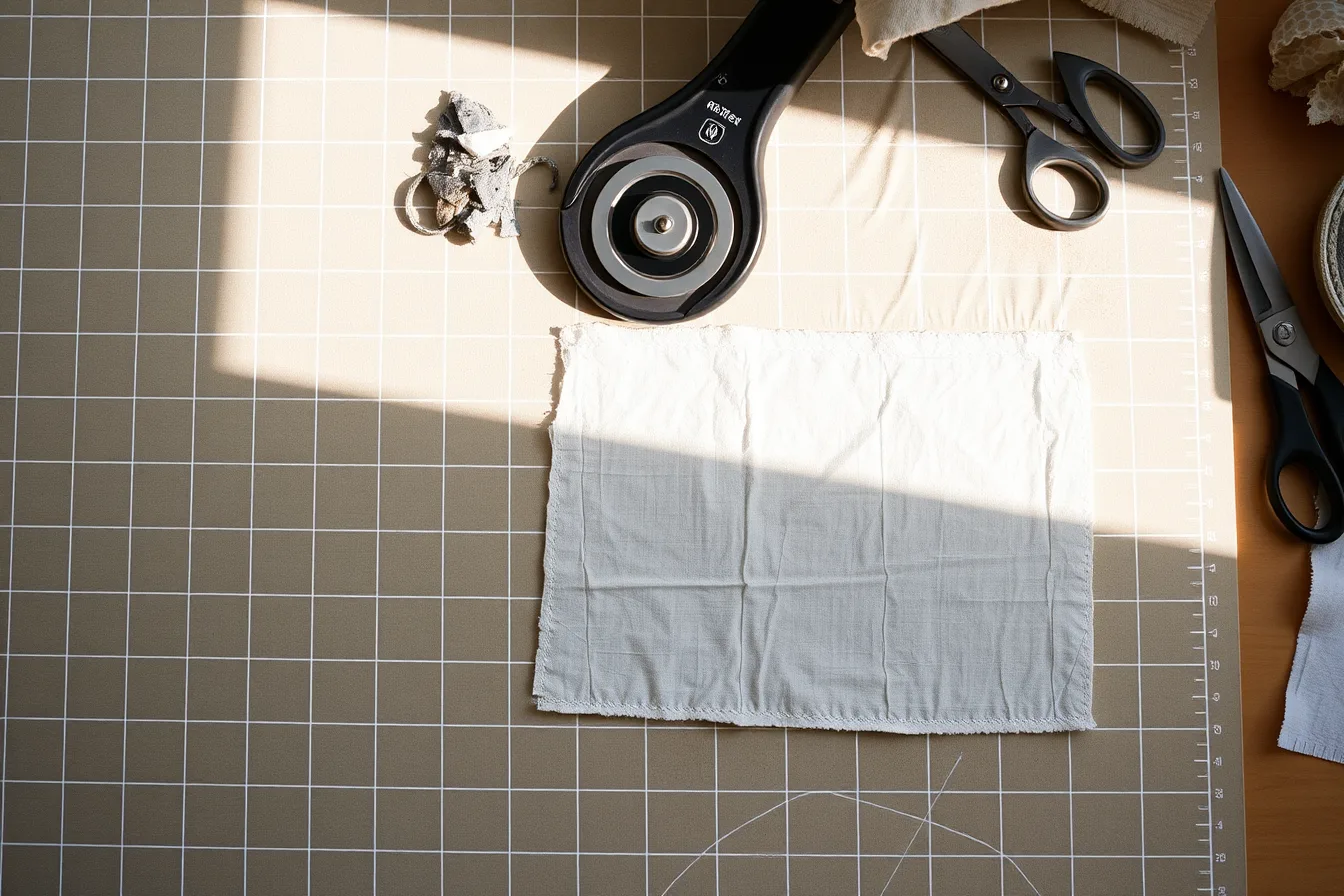
Hardness decides the outcome. A dull blade strains your hand, and that wear shows up in the cut. If the cutting surface is harder than the steel, the steel loses. Rotary cutters need a self-healing mat; shears prefer to cut with the lower blade just clearing the surface, which is what a bent handle is for.
Prices are typical U.S. retail as of 2026.
Material and wear
- Olfa Self-Healing Cutting Mat, 24 x 36 in.
- PVC self-healing
- Fiskars Self-Healing Cutting Mat, 24 x 36 in.
- PVC self-healing
- Dritz Self-Healing Cutting Mat, 18 x 24 in.
- PVC self-healing
- Dahle Vantage Self-Healing Mat, 18 x 24 in.
- PVC self-healing
- John Boos Reversible Maple Cutting Board, 18 x 12 in.
- Hard maple
- Anchor Hocking Glass Cutting Board, 12 x 15 in.
- Tempered glass
- Corian solid surface countertop
- Mineral-filled acrylic
- Dining table with lacquer finish
- Wood with finish
Effect on blades
- Olfa Self-Healing Cutting Mat, 24 x 36 in.
- Kind to rotary blades; grooves form
- Fiskars Self-Healing Cutting Mat, 24 x 36 in.
- Kind to hand and rotary blades
- Dritz Self-Healing Cutting Mat, 18 x 24 in.
- Fine for light rotary use
- Dahle Vantage Self-Healing Mat, 18 x 24 in.
- Kind to blades
- John Boos Reversible Maple Cutting Board, 18 x 12 in.
- Neutral for shears; grit can dull
- Anchor Hocking Glass Cutting Board, 12 x 15 in.
- Dulls shears fast
- Corian solid surface countertop
- Dulls shears
- Dining table with lacquer finish
- Depends on finish
Typical price and notes
- Olfa Self-Healing Cutting Mat, 24 x 36 in.
- $50 to $75; grid; replace when the blade wanders
- Fiskars Self-Healing Cutting Mat, 24 x 36 in.
- $30 to $50; softer; can warp if stored hot
- Dritz Self-Healing Cutting Mat, 18 x 24 in.
- $20 to $35; hobby grade; wears faster under heavy rotary
- Dahle Vantage Self-Healing Mat, 18 x 24 in.
- $35 to $55; stiff backing
- John Boos Reversible Maple Cutting Board, 18 x 12 in.
- $100 to $180; oil it; absorbs spills
- Anchor Hocking Glass Cutting Board, 12 x 15 in.
- $10 to $20; easy to clean; not for rotary
- Corian solid surface countertop
- Installed price varies; not for rotary
- Dining table with lacquer finish
- Marks the table, not the blade
Wood and plastic mats are softer than steel, so they spare an edge. Glass, stone, and Corian are harder than most blade steel, so they flatten the edge. A dining table is a wild card: the finish decides what gets marked.
Wear shows up as grooves, bubbles, or a dull spot. Rotate a mat to spread cuts. Store mats flat and out of sun. Replace a mat when the blade drops into a groove.
Cutting Surfaces Compared
Self-healing mat
- Effect on blades
- Kind to blades
- Notes
- Grooves over time
- Replacement
- Needs replacing
Hardwood board
- Effect on blades
- Neutral
- Notes
- Marks and absorbs spills
- Replacement
- —
Glass or stone
- Effect on blades
- Dulls quickly
- Notes
- Easy to clean
- Replacement
- Bad for tools
Pressing surfaces: mats, boards and covers
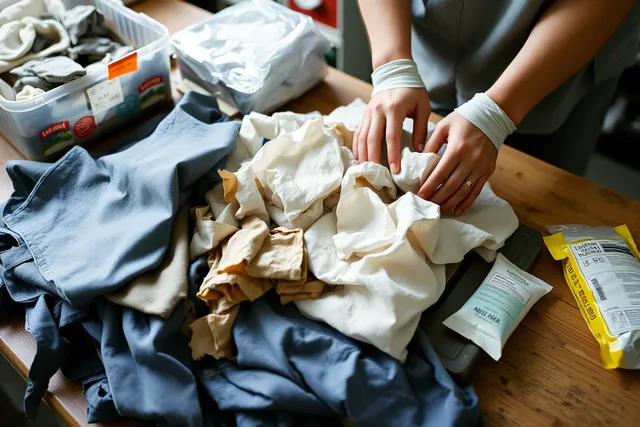
A pressing surface has one job beyond flatness: not contaminating the next thing you press. Covers should be washable cotton. Deal with spills right away.
The Gypsy Quilter Wool Pressing Mat, 17 x 17 in., is felted wool and typically sells for $60 to $90. It holds heat and absorbs steam, but it can compact over time. Brabantia Ironing Board with Cotton Cover, Size B, typically sells for $100 to $180; replacement covers run about $25 to $40.
Household Essentials tabletop boards usually cost $25 to $45. Minky Homecare Universal Ironing Board Cover typically costs $20 to $40.
Material
- The Gypsy Quilter Wool Pressing Mat, 17 x 17 in.
- Felted wool
- Brabantia Ironing Board with Cotton Cover, Size B
- Steel top, cotton cover
- Household Essentials Tabletop Ironing Board
- Steel top, cotton cover
Wear and care
- The Gypsy Quilter Wool Pressing Mat, 17 x 17 in.
- Holds heat; absorbs steam; can compact
- Brabantia Ironing Board with Cotton Cover, Size B
- Even heat; cover washable
- Household Essentials Tabletop Ironing Board
- Small footprint; cover washable
Typical price
- The Gypsy Quilter Wool Pressing Mat, 17 x 17 in.
- $60 to $90; spot clean, dry flat
- Brabantia Ironing Board with Cotton Cover, Size B
- $100 to $180; cover $25 to $40
- Household Essentials Tabletop Ironing Board
- $25 to $45; cover $10 to $20
Remove Wax from a Cover
- Scrape excess with a dull knife
- Place stained fabric between white paper towels
- Press with a warm iron from the back
- Rotate the towel as it picks up stain
- Sponge with commercial cleaner, then rinse
- Apply detergent and launder in hot water
Wax is the common contaminant, from candles, from crayon, from furniture polish. Extension guidance on candle wax and paraffin gives a method that also works on a board cover.
Scrape the excess with a dull knife. Place the stained fabric between white paper towels and press with a warm iron from the back. The wax transfers into the towel. Rotate the towel as it picks up the stain. Sponge with a commercial cleaner, rinse, apply detergent, and launder in hot water.
The same technique lifts wax out of a cover before it can bake into a garment.
Adhesive residue from fusible web behaves like wax. Warm it, blot it, then clean the soleplate with commercial iron cleaner. Never scrape a soleplate with metal. Replace a scorched cover. Wool mats need air, so dry a damp mat flat before storing it.
The floor is part of the room
In a small home the fabric stock, the work surface, and the floor share a few cubic meters of air, so what the floor emits matters.
The National Park Service leaflet on selecting carpets and floor coverings makes the argument at museum scale. Controlling the environment is the first and most cost-effective step in preserving objects. Stable storage and exhibit materials matter, and carpeting and floor coverings can be a source of indoor pollution that harms objects.
It notes the rise of indoor air quality testing and points to the Carpet and Rug Institute testing and certification program for carpet and adhesive products.
The household version: new carpet, fresh adhesive, and freshly painted shelving all give off vapor, and fabric stored in that room absorbs odors. Give a new surface time and ventilation before the stock moves in.
Named floor products carry labels. Look for the Carpet and Rug Institute Green Label or Green Label Plus on carpet, cushion, and adhesive. Interface, Shaw, and Armstrong list low-emission lines.
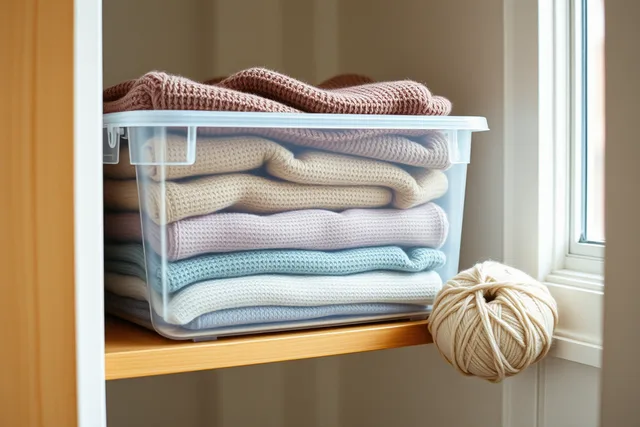
Seal a concrete floor before fabric storage. Use a low-odor sealer and let it cure. Keep fabric in closed bins during flooring work.
Test a scrap of fabric near the floor. If it picks up a smell, move the stock.
Height and clearance
Set the cutting surface at hip height. Set the pressing surface a little lower, so you can lean into the iron. If only one surface is available, favor the cutting height. Pressing on a slightly high board is less punishing than cutting on a low one.
Which tools that surface has to serve is covered in how mending tools fail, and the general surface and light choices still apply on top of these.