Guides
Part of Sweater mending how it works: a step-by-step guide
Which moth-control habits actually protect a small sweater mending setup?
Sweater mending setup: storing and repairing knitwear in a small home, what clothes moths actually eat, why cleaning matters more than repellents.
For woven cotton, a small-space setup is a storage problem. For wool it is a pest problem, and the two have different answers. A cramped home with wool in it needs a setup organized around keeping moths out, because a moth problem costs more than any amount of shelf space.
What to take away
- Clothes moth larvae eat keratin, so wool, silk, fur, feathers and felt are the targets. Cotton and synthetics are rarely attacked unless blended or soiled.
- Soil is the attractant. Clean storage beats repellents.
- Sealed containers, not open shelves, for anything wool you are not wearing this season.
- Inspect on a schedule, because moths avoid light and you will not notice by accident.
What they actually eat
Clothes moths are specific about their food. The University of Kentucky extension fact sheet on what fabric pests feed on says they feed exclusively on animal fibers, especially wool, fur, silk, feathers, felt and leather. Those contain keratin, a fibrous protein the larvae can digest.
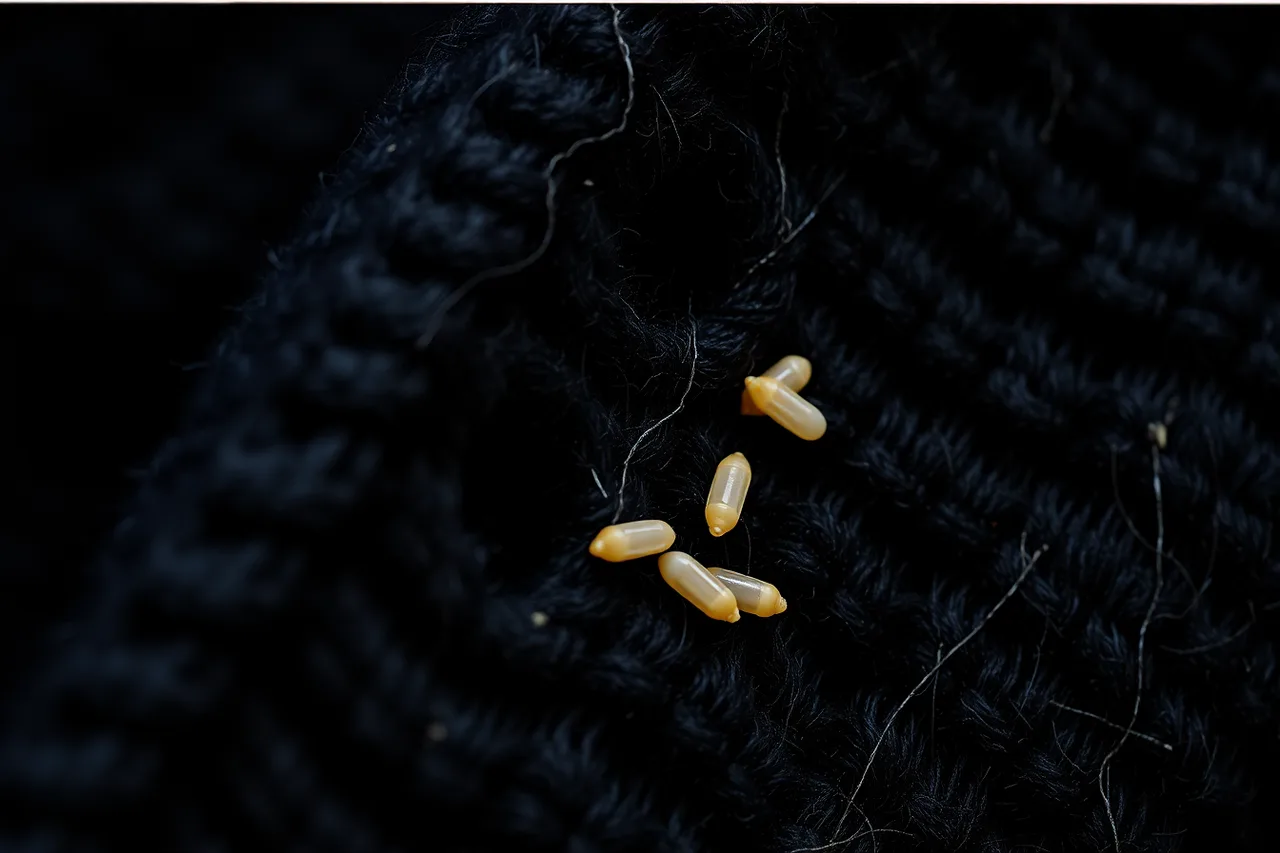
Cotton and synthetics such as polyester and rayon are rarely attacked, unless blended with wool or heavily soiled with food stains or body oils. The moths themselves are small, about half an inch, beige or buff colored. They are seldom seen, because they avoid light and prefer dark undisturbed places such as closets, basements and attics.
Two things follow. Your synthetic clothes are mostly safe, and a soiled cotton garment stored next to wool becomes food.
Cleaning is the main control
Because soil is what makes fibers attractive, the most effective thing you can do in a small home is put nothing away dirty.
Penn State Extension's page on the two species that damage stored woollens names Tinea pellionella, the casemaking clothes moth, and Tineola bisselliella, the webbing clothes moth.
Both are worldwide, feed on animal by-products like furs and wool carpets, and damage stored wool clothing. The webbing clothes moth adult is about 7 to 8 millimeters with wings folded back, golden buff.
That is a small, drab insect in a dark closet, which is why the first sign is usually the damage. Laundering and sealed storage are the two controls a small household can apply continuously; everything else is a response to a problem you already have.
The setup, on one shelf
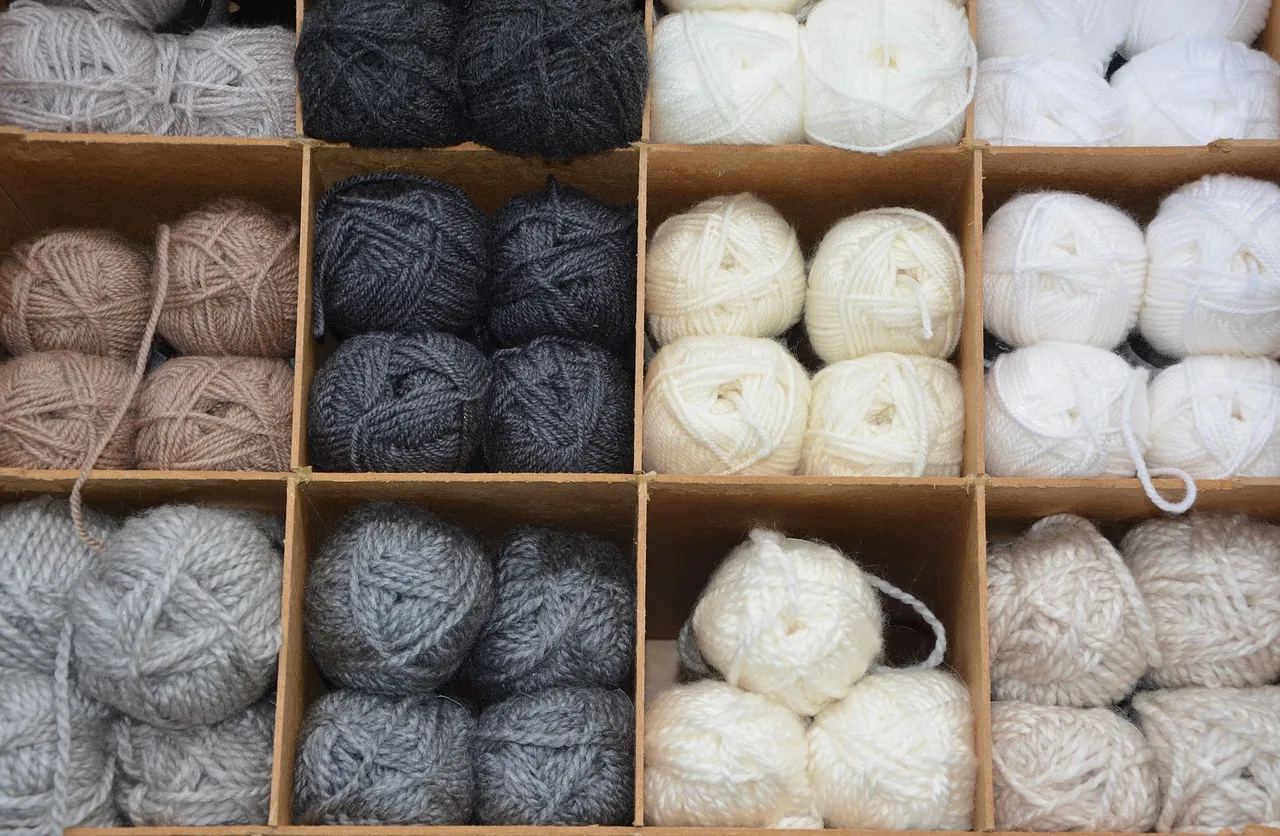
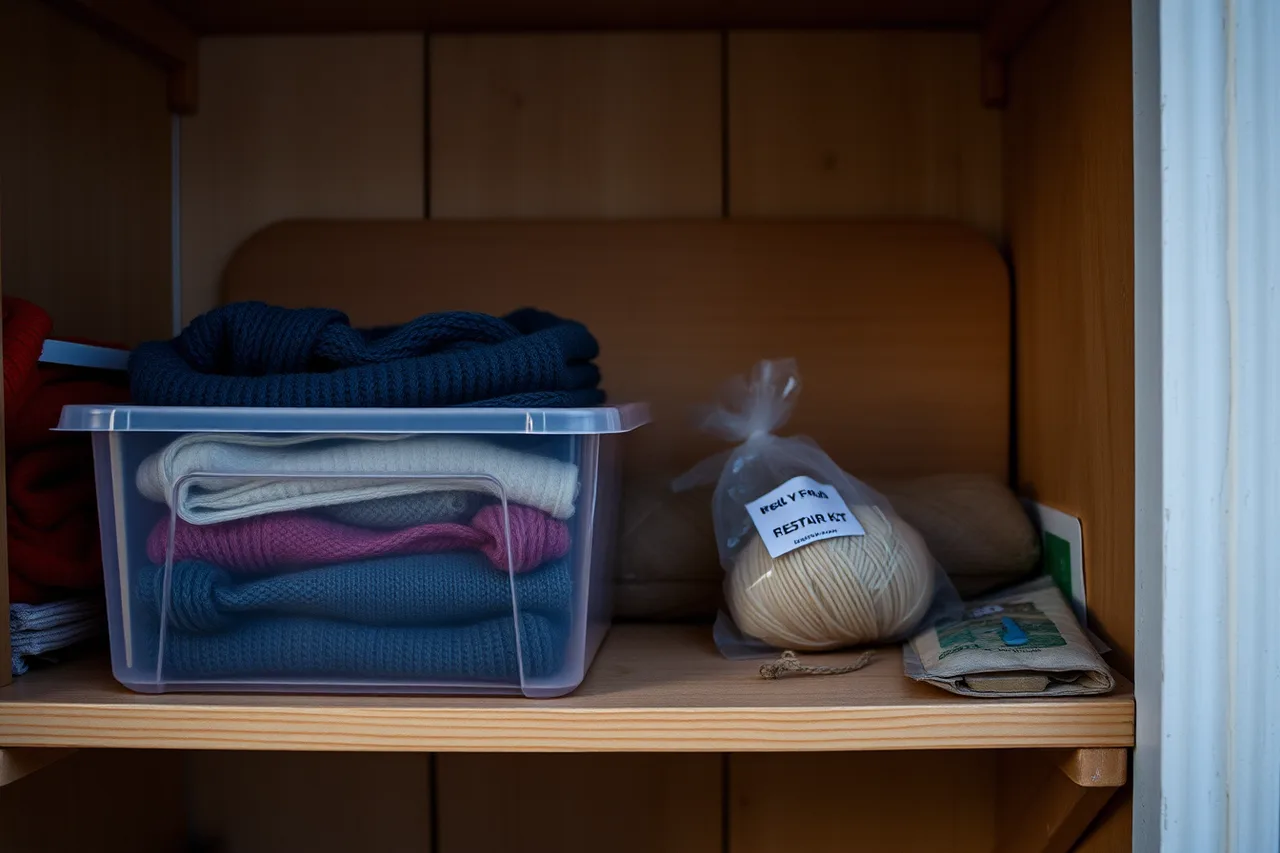
- A sealed box for out-of-season wool, everything in it washed or dried cleaned first
- A separate sealed bag for wool yarn and wool scrap
- Cotton and synthetic scrap in an open box, since it is not the target
- A repair kit box, and a padded board stored flat behind it
- A note on the shelf recording the date of the last inspection
Nothing here needs a room. It needs discipline about what goes in dirty.
Inspecting
Twice a year, open everything, shake each item out over a light surface, and look for webbing, small tubular cases, or fine debris. Check folds, cuffs, underarms and anywhere a garment touched a body, because that is where the oils are.
If you find damage, the repair sequence still applies, but treat the storage first, and be realistic about the cost of a treatment episode against the cost of a sealed box.