Guides
Part of Which creative mending ideas fix which problems
Creative mending in a small space: a shelf, not a spare room
Creative mending ideas setup for a small home: darning, sashiko patching and duplicate stitch, plus storage sized to one shelf.
Creative mending ideas only happen if the mending setup is easy to open, and in a small home that means sharing space with everything else. The version that survives packs away in two minutes, so it is worth designing around that from the start rather than discovering it after a folding table has lived in the hallway for a month.
What to take away
- Measure what you own before buying storage. Storage bought first fills with things you do not need.
- Two minutes to set up and two to clear away is the threshold. Past that, the kit stays in the cupboard.
- Keep fabric out of damp corners. Humidity, not space, is what ruins a small stock.
- One shelf and one board is a complete setup for most people.
- The mending itself is hand workdarning, sashiko patching, duplicate stitch. None of it needs a machine or a room.
The mending that fits on a shelf
A shelf is enough because the repairs worth doing by hand ask for very little. These are the techniques that fit the space, and what each one needs:
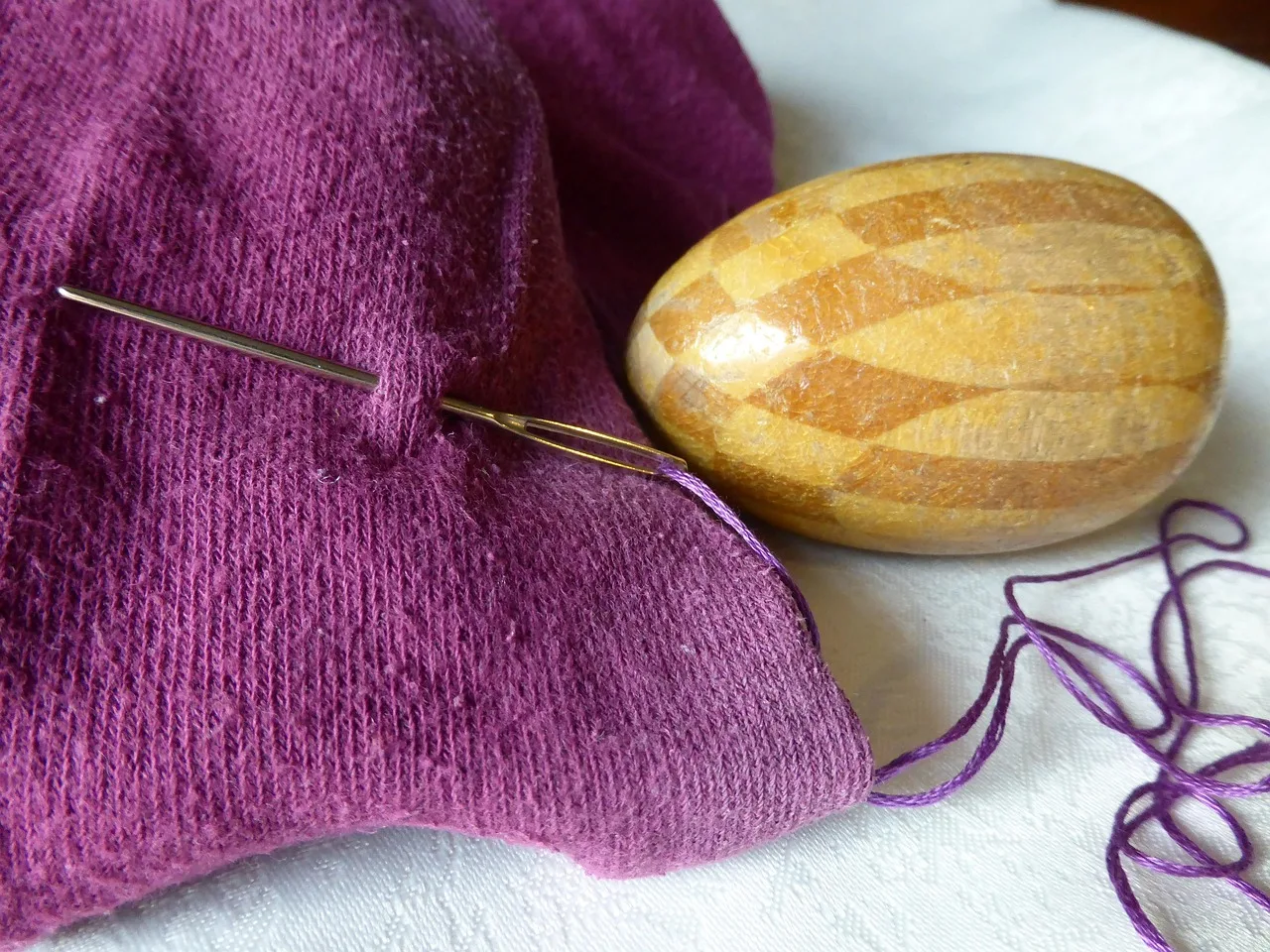
- Darning.Rebuild a worn sock heel or a sweater elbow over a darning mushroom or a darning egg, using wool yarn close to the weight of the garment.
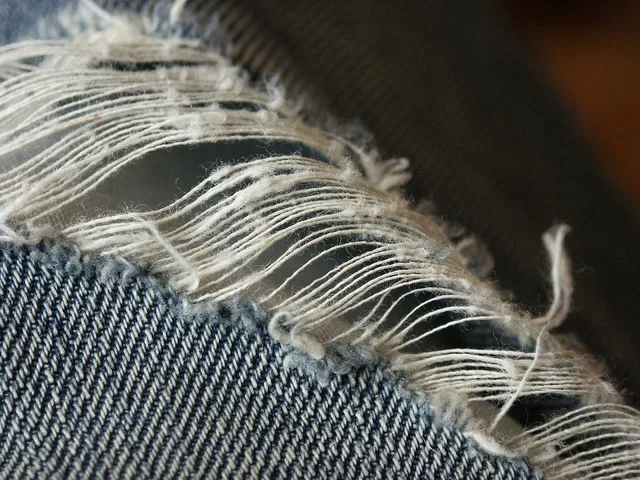
- Sashiko patching.A long sashiko needle and sashiko thread, or embroidery floss, stitched in rows over a patch cut from worn-out denim. This is the boro look, and it is the visible mending most people picture.
- Inside patching.Cut a patch from old denim or cotton, place it behind the tear on the wrong side, and stitch it down with a running stitch. The garment keeps its shape and the repair stays hidden — the quiet version of the same idea.
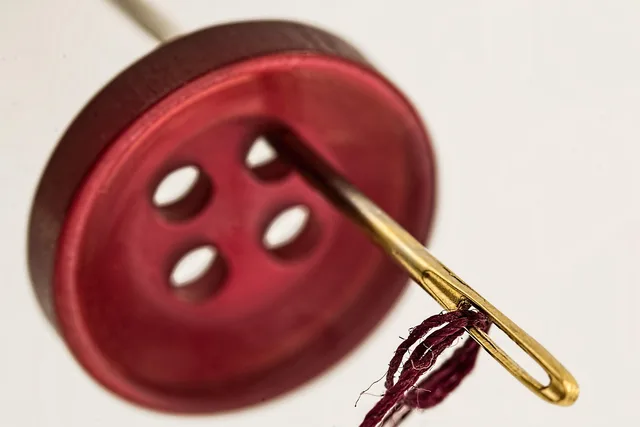
- Duplicate stitch, also called Swiss darning.A blunt tapestry needle and the same yarn follow the existing stitches to fill a thin spot on a sweater or a sock.
- Seam repair.A running stitch and a whipstitch with a sharp hand-sewing needle close a split sleeve or cuff seam.
A thimble, a seam ripper and small sharp scissors make all five easier, and they all live in the same box as the rest of the kit.
Size the storage to the stock
Work out what you have before you decide where it goes. Stack your patch fabric, measure the stack, and buy a box that fits it with a little room. Do not buy the box first.
Then get it off the floor. The National Park Service leaflet on modifying museum storage cabinets explains why. Floor cabinets risk flooding and can harbor pests in areas you cannot reach to clean.
Its accessories raise cabinets at least 4 inches off the floor, preferably 6. It also warns stacked cabinets can slide when drawers below are pulled.
In a small home the floor is the tempting surface, and it is the one place fabric should not live.
The two-minute rule
A setup that takes ten minutes to assemble gets used on weekends and then not at all. Design for two:
- A covered boarda padded board in cotton canvas — that lives flat behind a door or under a sofa
- A single closed box, ideally an acid-free archival box, holding needles, thread, scissors, pins and the pressing cloth
- A clip-on task lamp that stays clipped to the shelf it lives on
- One bag for the current project, so an unfinished repair does not spread
Everything else is stored, not staged. If a tool is not in the box, it is not part of the working kit.
Watch the humidity, not the square footage
Small homes push storage into the places with the worst air: under a sink, in an unheated closet, against an outside wall. Fabric minds that more than it minds being cramped.
A cheap hygrometer answers the damp question, and it is worth owning because a closet can be consistently worse than the room it opens onto.
The other air problem in a small home is everything you cook, burn, and smoke in the same few rooms. Extension guidance on smoke and soot shows how stubborn the result is once fabric absorbs it.
The recommended treatment is repeated laundering, three to five times, in small loads with liquid detergent or one formulated to remove odors. Do not dry between washes or use fabric softener until the odor has gone.
Five wash cycles to undo something is a strong argument for a closed box rather than an open shelf near a kitchen. And if a spot reads consistently damp, move the fabric even when the alternative shelf is less convenient.
What to give up
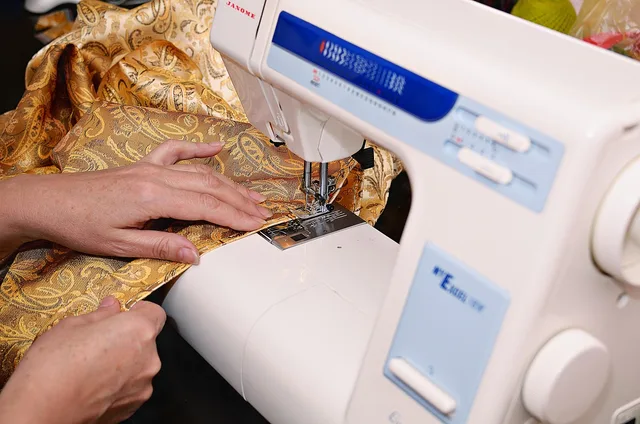
A dedicated table, a machine, and a large fabric stash. None of the three is needed for hand mending, and each of them is what turns a small setup into a project that never fits. Keep the stash to what one box holds, and cut new salvage down before it goes in.
The work surface and light are the part worth spending on within these limits, and the buying order keeps the box from overflowing in the first year.