Features
Which creative mending ideas fix which problems
Eighteen mending approaches grouped by the damage they suit, from woven darns and reverse applique to reinforcement patches added before a hole appears.
Creative mending lists usually sort by how a repair looks. Sorting by what the repair fixes is more useful, because the damage is the part you do not get to choose. These eighteen are grouped that way, and none of them requires equipment beyond a needle.
What to take away
- Pick the idea after diagnosing the damage. A decorative choice applied to the wrong failure is still the wrong repair.
- Reinforcement before failure is the cheapest category and the one people skip.
- Adding fiber to a garment is a normal, named practice, not a workaround.
- Stains and scorch marks are repair problems too, and often the easiest ones to make interesting.
For holes in knits
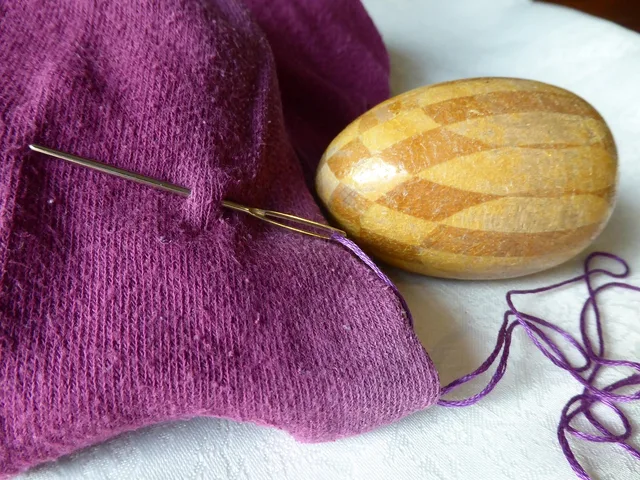
- A woven darn worked in contrasting yarn, left square rather than blended in
- A Swiss darn following the original knit structure, in a second color
- A felted patch pressed and needle-felted into the hole from behind
- A knitted swatch grafted in, with the join left visible
For holes and wear in wovens
- A patch applied on top with turned edges and running-stitch rows across it
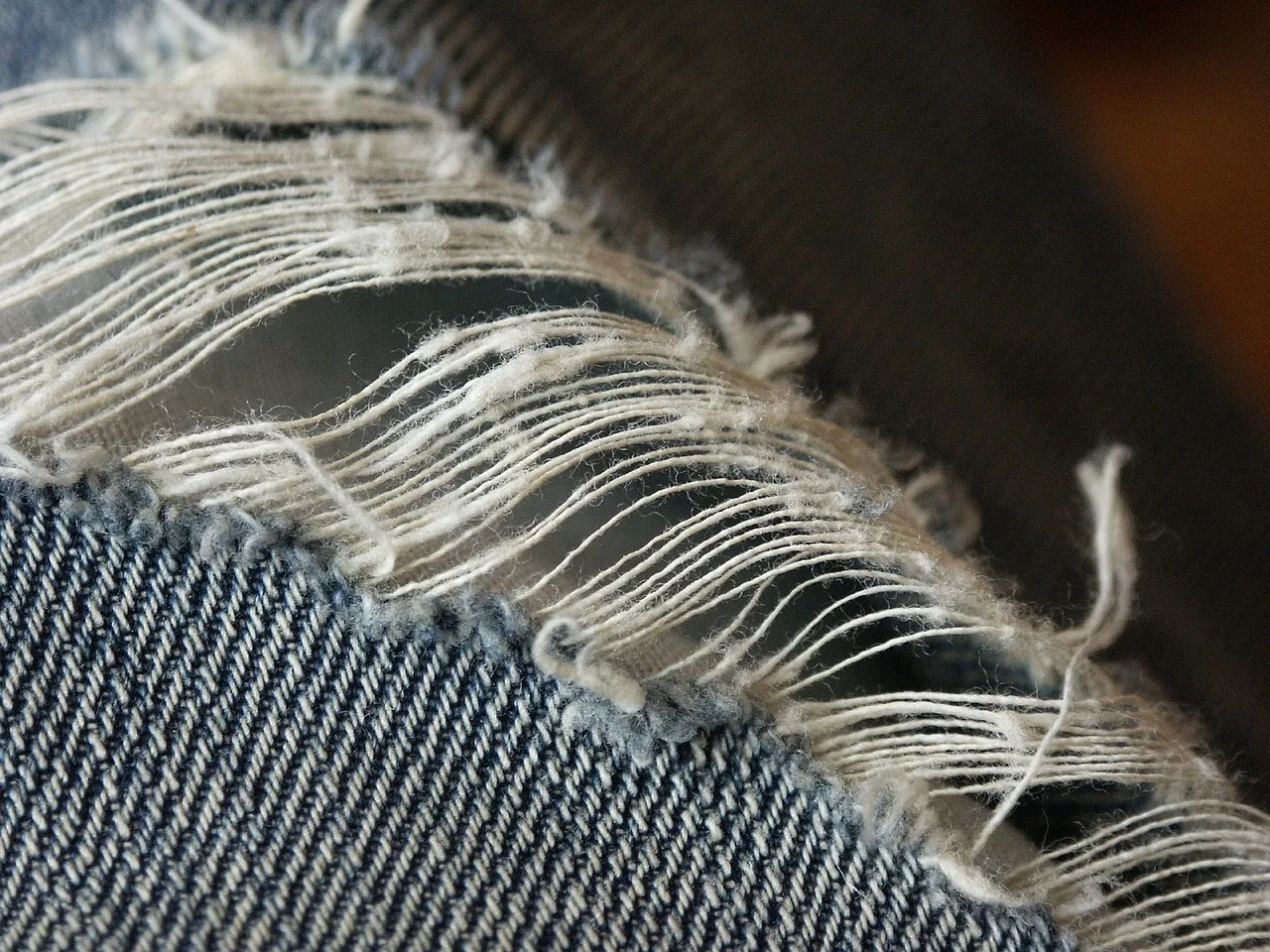
- A patch applied behind, with the frayed hole edges left showing
- A patch cut from a contrasting garment so the grain runs at an angle
- Rows of straight stitching extended well past the patch as a field of texture
- Reverse applique, where a second layer goes behind and the top layer is cut back into a shape
For seams and structure
- Reinforcing a stress point before it fails, at the pocket corner or crotch seam
- Rebuilding a worn hem with a facing strip in a different fabric
- Replacing a whole panel, such as an elbow section, rather than patching within it
Adding a second fiber for reinforcement is a recognized thing rather than an improvisation. The textile labeling rules cover products containing superimposed or added fibers, where a product made of one fiber or blend carries an additional fiber in minor proportion added in separate and distinct areas for reinforcing or other useful purposes. Manufacturers do it. So can you.
For stains and marks
- Patching over a stain that will not come out, sized to the mark rather than to a hole
- Embroidering a shape that incorporates the stain outline
- Overdyeing the whole garment so the mark reads as intentional
- Cutting out the stained area and treating it as a hole
Before patching a scorch, try removal. Extension guidance on scorch and burn marks gives a light-scorch method: wet the stain with 3 percent hydrogen peroxide, keep it moist, then rinse well and launder.
For a heavy mark, cover with a cloth dampened in the same solution. Then cover with a dry cloth and press with an iron as hot as is safe for the fabric.
For garments you want to change anyway
- Adding pockets while repairing a seam
- Shortening a worn sleeve and finishing the new edge as a feature
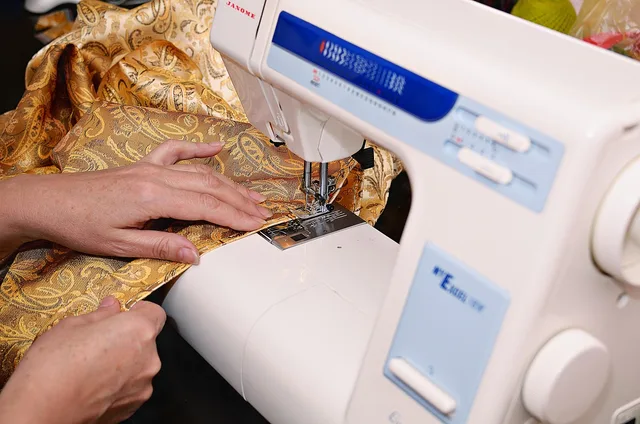
Whatever you choose, the work surface matters more than the idea does, and a small setup you can leave assembled beats a good idea you never get out. The small space arrangement is the practical half of this list.
Common questions
Which of these is easiest for a first attempt?
Can these be combined on one garment?
Do decorative repairs weaken the garment?
How do I choose colors that do not look accidental?
In this guide
- Work surfaces for creative mending, compared by light and heightWork surfaces and light for mending at home: choosing a surface height, a support board that keeps fabric flat, and light placement that shows stitch tension.
- Working from scrap: how repair-led makers source material, in plain termsHow menders who work from salvaged cloth handle unknown fiber content, what the labeling rules say about scrap and reclaimed fiber, and how to build a stock.
- The order to buy creative mending supplies in, and why it mattersThe order to buy mending supplies in, tied to the skills you learn along the way, and how to read a fiber label so you buy thread that matches the garment.
- A mending cost guide: what supplies actually cost per repairWork out what a repair costs in thread, cloth, patches and tool wear, with illustrative prices and the simple arithmetic to swap in your own.
- Creative mending in a small space: a shelf, not a spare roomCreative mending ideas setup for a small home: darning, sashiko patching and duplicate stitch, plus storage sized to one shelf.