Reviews
Part of Visible mending: what a beginner should know before the first repair
Keeping thread and patch fabric usable in a small mending kit
Keeping mending materials usable: humidity limits that invite mold, why patch fabric should be washed before storage, and how to organize a small kit.
Mending supplies fail quietly. Thread goes brittle, patch fabric picks up a stain nobody sees until it is stitched onto a shirt, and a damp box grows mold that spreads to everything in it. None of this is dramatic, and all of it wastes the fabric you were saving.
What to take away
- Wash patch fabric before storing it. Soil attracts pests and stains set while the cloth sits.
- Keep the storage area dry and not warm. Mold growth accelerates above roughly 75 degrees F and 65 percent relative humidity.
- Store thread out of light. Dye fades on the spool, and you will not notice until the mend is on the garment.
- Sort patch stock by fiber, not by color. Fiber is what you match when a repair comes up.
Humidity is the real threat
Textiles support microorganism growth, and damp storage is where it starts. The National Park Service leaflet on the causes and prevention of mold and mildew on textiles notes that fungal spores are effectively everywhere. It also gives the general optimum conditions for growth: temperatures above 24 degrees C, which is 75 degrees F, combined with relative humidity above 65 percent.
Mold growth conditions
- 24 Ctemperature threshold
- 75 Ftemperature threshold
- 65%relative humidity threshold
Cellulosic fibers such as cotton, linen and rayon are the most vulnerable, because the microorganisms convert cellulose into sugar and feed on it. Wool and silk resist better but are still attacked.
That rules out the two places people naturally store fabric: a garage and a basement floor. An interior closet shelf is usually the driest spot in a home.
Prepare fabric before it goes in the box
Clean cloth stores. Dirty cloth degrades. Extension guidance on the care and storage of textile heirlooms makes the mechanical point plainly: dirt particles cut fibers through friction and abrasion, so removing dust and soil is the first step in preserving any textile.
Wash or brush?
What fiber is the patch stock?
Cotton, linen, rayon -> wash, dry fully
Wool, silk -> air and brush, never wet
The same page notes that wet cleaning cotton and linen removes acid buildup, leaving the fiber more flexible. Wool and silk weaken when wet and are harder to clean safely.
So: wash cotton and linen patch stock, air and brush wool rather than washing it, and let everything dry completely before it goes into a container.
A layout that survives contact with reality
- One shallow box for patch fabric, folded flat, sorted into cotton, wool, and synthetic.
- One tin for needles, with the sizes separated. Loose needles in a drawer bend.
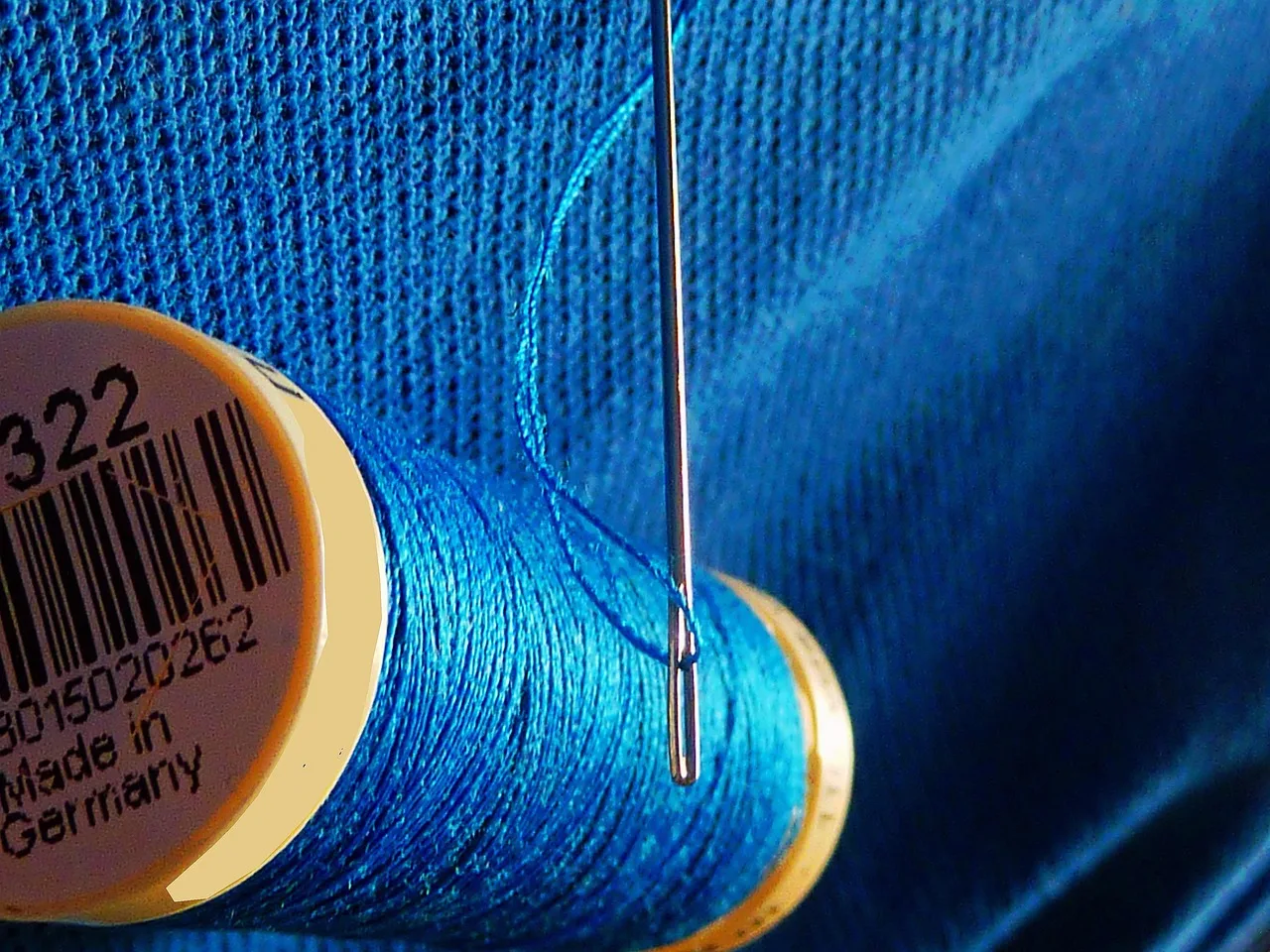
- Thread upright in a drawer or a closed box, never on an open rack in a lit room.
- One small bag holding the current project, so a half-finished repair does not migrate.
Avoid sealed plastic bins in an unheated space. Sealed containers trap whatever humidity was in the room when you closed them, and temperature swings condense it onto the fabric.
Keep the record with the materials
When you cut a patch, write the fiber on a slip of paper and keep it with the fabric. That note lets you match a repair a year later.
Store images of finished repairs with those notes for a usable reference. The fiber reasoning behind a repair is easier to apply when stock is already labeled.