Reviews
Part of Visible mending: what a beginner should know before the first repair
Needles, hoops and thread for visible mending, compared by type not brand
Needles, hoops, darning mushrooms and thread compared by what each type actually does well, plus a note on why no brands are ranked or tested here.
This compares categories of tool, not products. We have not run brands side by side, so ranking them would be invention. What follows is what each type of tool does, where it fails, and which ones a first-time buyer can skip.
What to take away
- Needle choice is driven by the fabric, not the technique. A sharp needle on a knit splits yarns and starts the next hole.
- A darning mushroom and an embroidery hoop solve opposite problems. One supports without stretching, the other holds flat under tension.
- Thread fiber should match the garment fiber. Mismatched shrinkage is the most common delayed failure.
- Three tools cover a first yearneedles in two sizes, small sharp scissors, and thread in the fibers you actually wear.
Needles
| Type | Point | Best on |
|---|---|---|
| Sharps | Sharp | Woven cotton, linen, denim |
| Ballpoint | Rounded | Jersey, sweaters, any knit |
| Darners | Sharp, long eye | Thick thread on wovens |
| Yarn needle | Blunt | Loose knits, yarn darning |
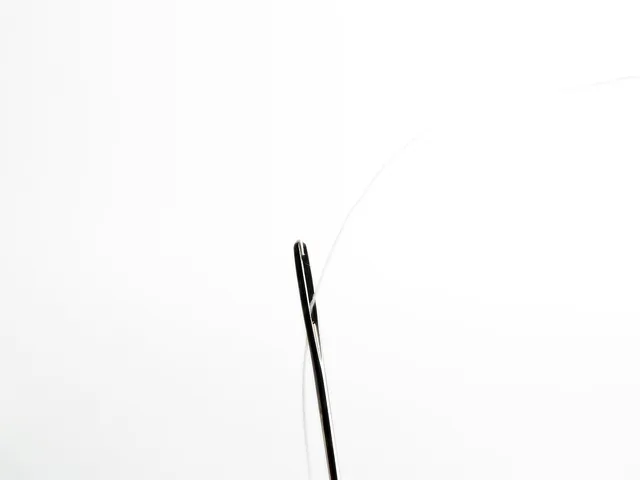
The distinction that matters is point shape. A sharp point pierces yarn; a rounded point pushes between yarns. On a knit, piercing a yarn cuts a load-bearing loop, and the damage shows up a few wears later as a run beside your repair. On a tight woven, a blunt needle will not go through at all.
Needle point shape by fabric
Sharp point
- Woven cotton
- Pierces cleanly
- Linen
- Pierces cleanly
- Denim
- Pierces cleanly
- Jersey
- Cuts load-bearing loop
- Sweaters
- Cuts load-bearing loop
- Loose knits
- Cuts load-bearing loop
Rounded point
- Woven cotton
- Will not enter
- Linen
- Will not enter
- Denim
- Will not enter
- Jersey
- Pushes between yarns
- Sweaters
- Pushes between yarns
- Loose knits
- Pushes between yarns
Blunt point
- Woven cotton
- Will not enter
- Linen
- Will not enter
- Denim
- Will not enter
- Jersey
- Pushes between yarns
- Sweaters
- Pushes between yarns
- Loose knits
- Pushes between yarns
Supports: hoop or mushroom
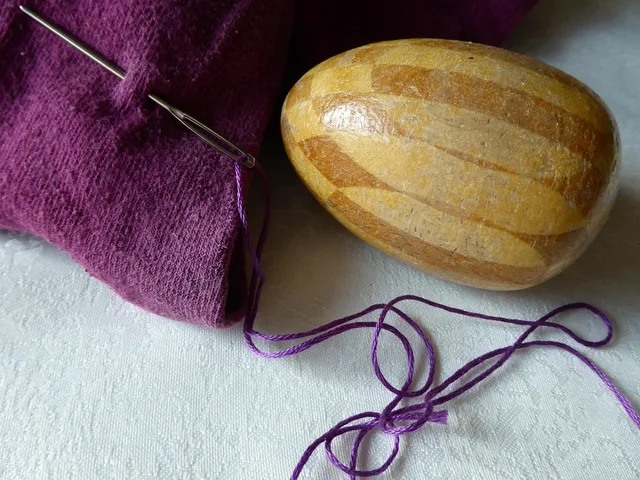
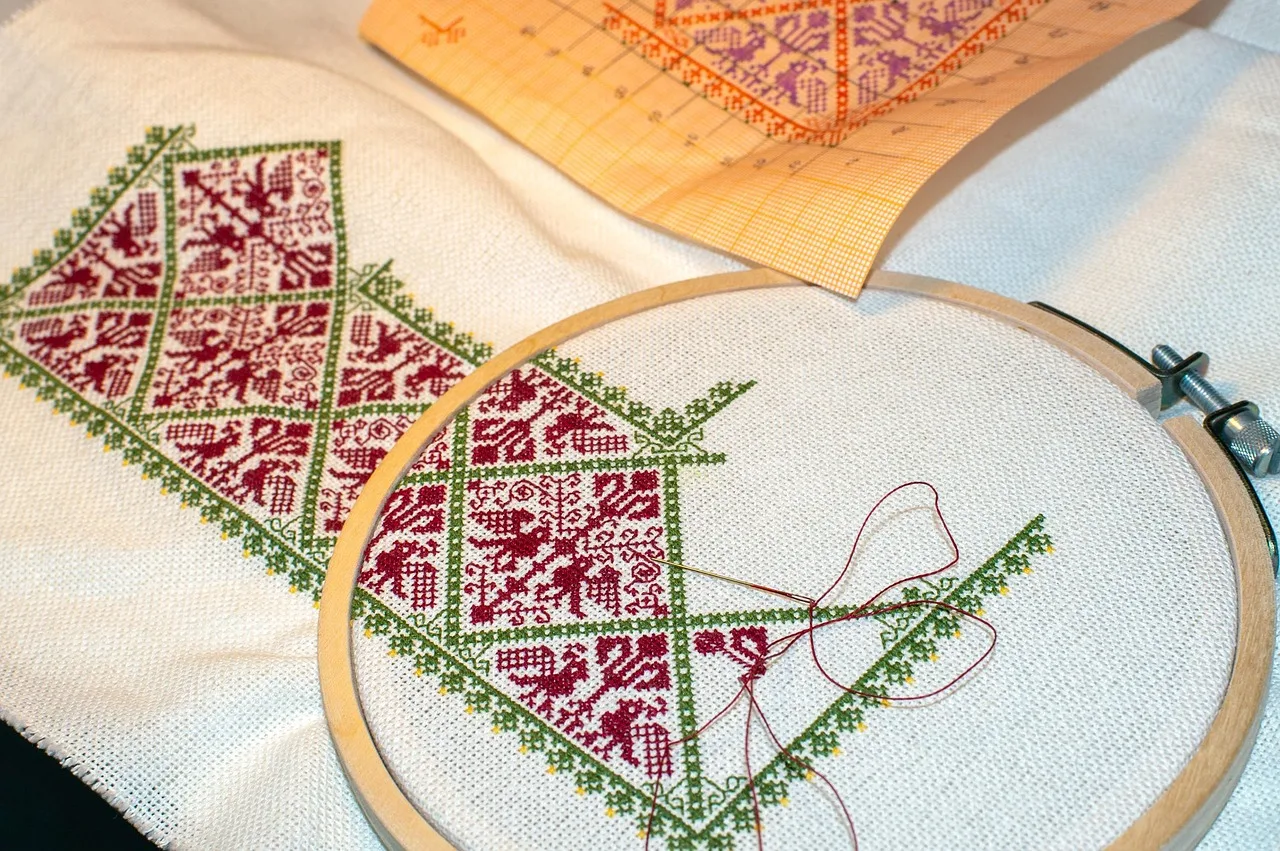
A darning mushroom is a rounded wooden form you hold under the hole. It gives a firm surface to stitch against without pulling the fabric. An embroidery hoop clamps fabric flat and slightly taut between two rings.
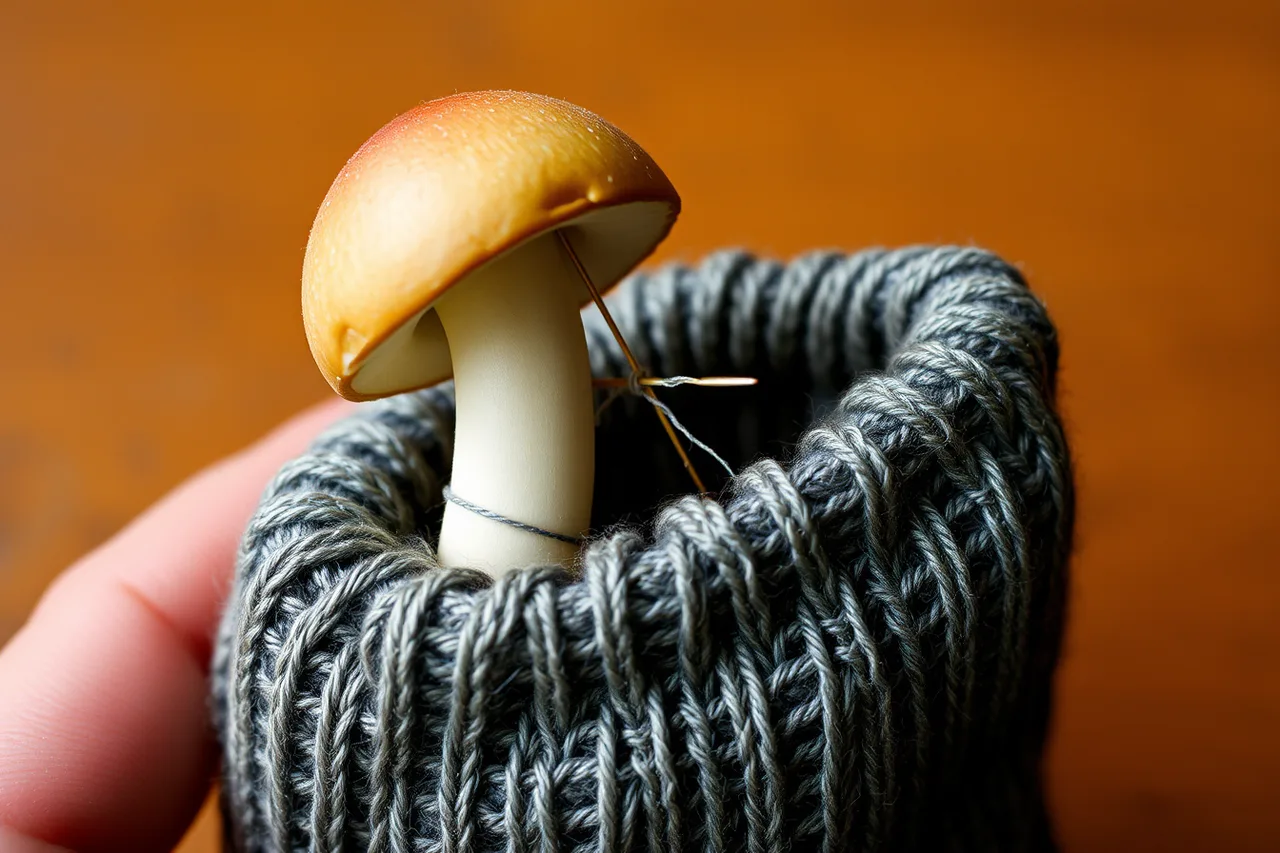
Use the mushroom for knits and anything with stretch. Use the hoop for woven fabric where you want the patch to stay flat while you stitch a grid. Using a hoop on a knit is the mistake that produces a puckered, cupped repair, because the knit is stretched while you stitch and contracts afterward.
Thread
Thread is where the money should go. Match fiber first, weight second, color last.
The extension reference on understanding your fibers lists fibers with care requirements and limitations. That same table works for thread: acetate is destroyed by acetone and melts at low heat, so you know what an iron will do to a repair on it.
Label wording is regulated, so what you read on the garment is a real signal. The generic names for manufactured fibers are set out in 16 CFR 303.7, which establishes those names and incorporates the ISO 2076 standard for man-made fiber names. When a label says polyester, that word has a defined meaning rather than a marketing one.
What to skip at first
Skip the mending kit sold as a set: kits pad the count with thread colors you will not use and a needle assortment weighted toward sizes you do not need.
Skip specialty presser feet until you own a machine you use. Skip thimbles until your finger tells you otherwise, then buy one that fits. A loose thimble is worse than none.
Buy the tools against a plan. Working through what the first repair involves will tell you which fabrics you are actually mending, and a class worth paying for usually specifies its own list.