
Industry
Part of Visible mending: what a beginner should know before the first repair
Why should a visible mending class actually explain before you pay for it?
What a mending class should cover, what to ask before booking, and why this page describes how to judge a class instead of ranking named studios.
There is no ranked list of studios here. We have not sat in these classes, and a directory assembled from marketing copy would tell you nothing about whether the teaching is any good. What follows is the set of questions that separates a class worth three hours from one that is a demonstration with a fee attached.
What to take away
- Ask what you will leave holding. A class that produces one finished repair on your own garment teaches more than one that produces a sampler.
- Class size drives quality more than the teacher's reputation. Above about eight students, nobody watches your hands.
- A good syllabus covers fiber behavior, not just stitch shapes. Fiber is what decides whether a mend survives washing.
- Bring your own damaged garment when allowed. Practice cloth behaves nothing like a worn knee.
Where classes actually exist
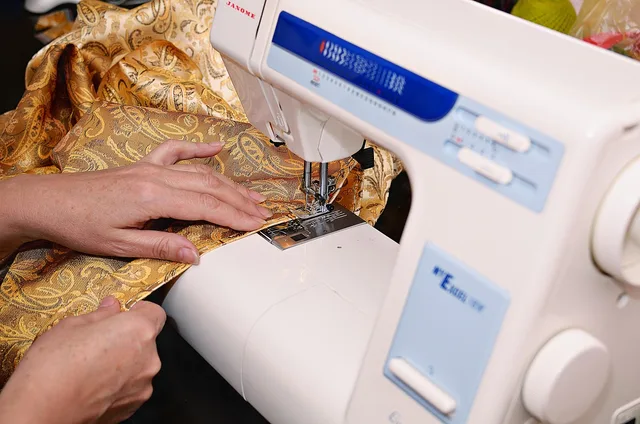
Mending instruction appears beyond dedicated studios. Public libraries run repair sessions. Community colleges teach clothing construction in continuing education. County extension offices run textile and sewing programs, often for youth but open to adults in some counties. Fabric shops teach on their own machines.
Where mending classes exist
Library
- Cost
- free
- Structure
- drop-in, short
- Best for
- first look
- Failure mode
- short session
Repair cafe
- Cost
- free
- Structure
- unstructured
- Best for
- second opinion
- Failure mode
- depends on volunteer
Community college
- Cost
- paid
- Structure
- continuing ed
- Best for
- full course
- Failure mode
- varies
Fabric shop
- Cost
- paid
- Structure
- own machines
- Best for
- machine practice
- Failure mode
- varies
Repair cafes are free and unstructured. That makes them good for a second opinion and poor for a first lesson.
Each of these has a different failure mode. Library sessions are usually drop-in and short. Repair cafes depend entirely on who volunteered that day.
What the syllabus should contain
A class that only teaches decorative stitch patterns leaves out the part that determines whether the repair lasts. The syllabus should address fiber and structure.
Syllabus must-haves
- Worn area vs torn area, and why repair differs
- Matching thread weight and fiber to garment
- Anchoring stitches beyond the damage
- What happens to the repair in the wash
- Fiber and structure, not just decorative stitches
The University of Georgia extension page on fiber types covers the ground a teacher should be covering: how natural and manufactured fibers differ, and why blended and combination fabrics behave unlike either component on its own. If the instructor cannot say why a wool patch on a cotton shirt is a problem, the class is decoration.
Look for these items in the description:
- How to tell a worn area from a torn one, and why the repair differs
- Matching thread weight and fiber to the garment
- Anchoring stitches beyond the damage
- What happens to the repair in the wash
What to ask before you book
Ask what tools are provided and what you must bring. Extension guidance on basic sewing supplies is a fair benchmark for a starter kit. It covers details a teacher should know, like sharp steel pins because dull pins damage fabric, and ballpoint pins on knits.
If the class expects equipment nobody explained, that signals how the three hours will go.
Then ask the practical questions. How many students. Whether you can bring your own garment. Whether the room has task lighting or overhead fluorescents. Whether there is a follow-up session, because the second repair is where the first one's mistakes become visible.
What a class cannot give you
Instruction compresses the learning curve. It does not replace repetitions. Most people need four or five repairs before stitch tension settles.
If you have not done one yet, work through what a first repair involves first. Then class time goes to correcting habits, not establishing them. A structured weekend practice plan covers the repetition at no cost.