Maintenance
Part of Denim repair methods by location: crotch, knee, hem, pocket
Reading denim repair mistakes people make at home with a sceptical eye
The denim-specific errors: new indigo bleeding onto the repair, oil stains set by hot washing, stiff patches, and waiting until the pale patch becomes a hole.
Denim mistakes divide into two groups. Some are ordinary mending errors that denim punishes harder. The rest are specific to the fabric, and those are the ones worth knowing in advance, because indigo and machine oil both behave in ways that surprise people the first time.
What to take away
- New indigo denim transfers color. Wash a new patch separately before it touches the garment.
- Oil stains want solvent treatment before any hot wash, not after.
- Waiting for the hole instead of reinforcing the pale patch triples the work.
- A patch stiffer than the garment moves the failure rather than fixing it.
The list
- Patching with new, unwashed denim
- Using a fine needle and forcing it through seam intersections
- Stitching only around the edge of the patch instead of across it
- Washing the repaired garment hot immediately, before the thread has settled
- Ignoring the pale area next to the one you just fixed
- Ironing directly on dark denim, which shines the surface
Indigo transfer is real
Dark denim gives up color: onto lighter garments, onto upholstery, and onto the pale patch you just installed. If it does happen, the extension guidance for dye stains gives a sequence for washables.
Remove indigo dye transfer
- Soak 30 minwarm water, dish detergent, ammonia
- Rinse, then soak 1 hour in warm water and vinegar
- Rinse and dry
- Work with alcohol on a pad, changing pad
That is a lot of effort compared with washing the new patch fabric on its own two or three times first. Do that instead.
Oil is the other denim stain
Work jeans collect machine oil, cooking oil and chain grease. The instinct to throw them straight into a hot wash sets the stain permanently.
Extension guidance on oil stains works in reverse. Sponge with a commercial solvent cleaner, cover with a pad dampened in it, and keep it moist, changing it as it picks up the stain.
Repeat until nothing more lifts, then let it dry. Sponge with water, apply diluted dish detergent with a few drops of ammonia, then flush with water.
Treat the stain, then wash. Not the reverse.
Reinforce the pale patch you can see
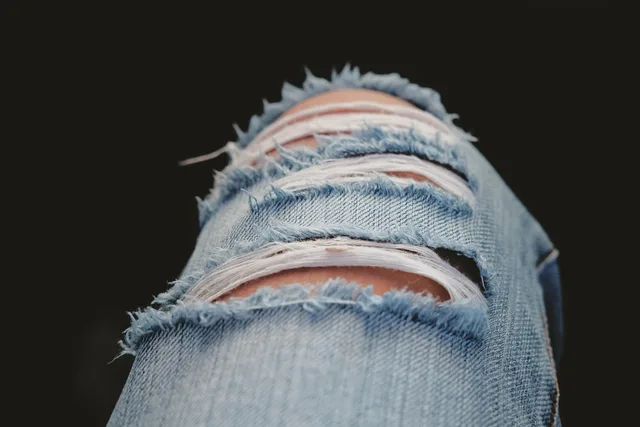
The single most avoidable denim mistake is repairing the hole and ignoring the pale area two inches away. Denim fades before it fails, so a pale patch is a scheduled repair, not a cosmetic issue. Reinforcing it while the fabric is intact takes ten minutes and holds for years.
Check the matching spot on the other leg while you are there. Wear on jeans is driven by how someone sits, walks and carries things, so both knees and both seat panels usually reach the same stage within a month or two of each other. Doing the pair at once costs one setup rather than two.
Most of these follow from how the fabric is built, which the comparison of methods explains, and the patch problems are largely solved at the material choice stage.