Reviews
Denim repair methods by location: crotch, knee, hem, pocket
Denim repair methods compared by where jeans fail: a patch behind at the knee, a larger patch at the crotch, a re-hem at the hem, a new pocket bag.
Where a pair of jeans gives out decides how to mend it. A crotch seam, a knee, a frayed hem and a torn pocket bag each fail in a different way, and each calls for a different repair. No kit or patch brand is ranked, because nothing was bought or tested.
What to take away
- A knee takes a straightforward rectangular patch behind the worn area.
- A crotch blowout needs a large patch across the intersection of four seams, and often a second layer.
- A frayed hem is usually a re-hem rather than a patch.
- Pocket bags are replaced, not mended.
- Fiber content can sit on a second label, so find both before choosing patch fabric.
Knees: a patch behind, stitched across
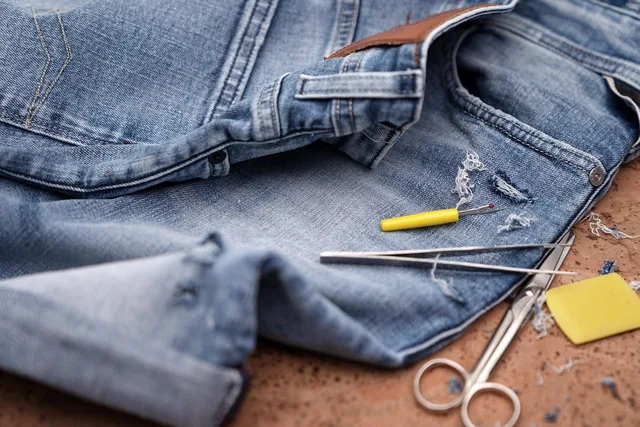
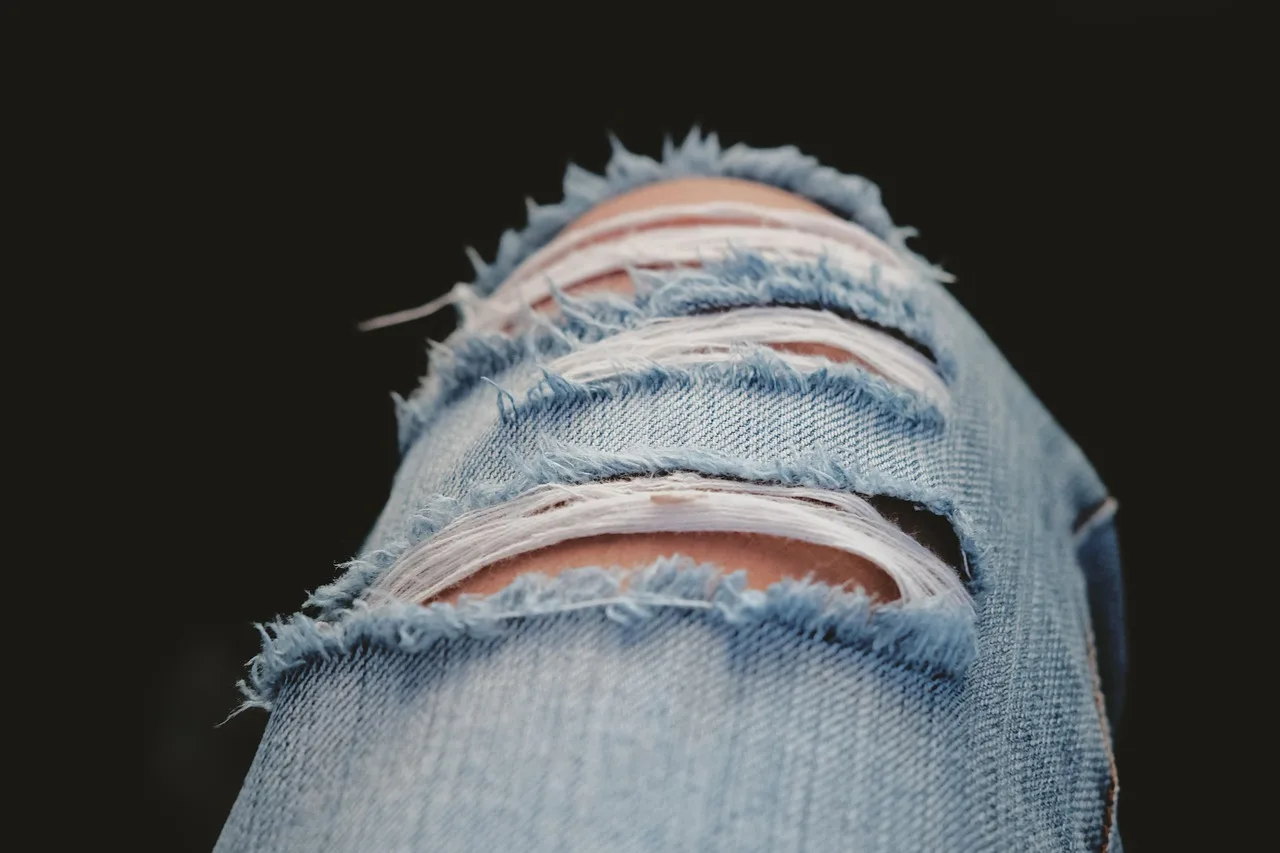
Knees take a rectangular patch placed behind the worn area, with stitching worked across it. Keeping the patch on the inside leaves the outside surface smooth, which matters where the fabric rubs against a boot or a floor.
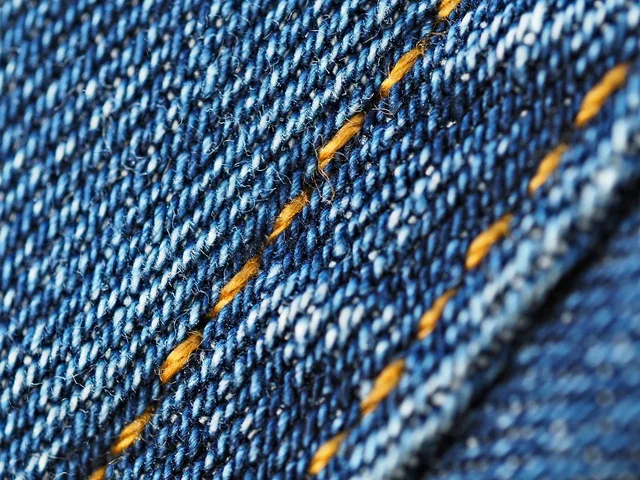
Denim wears from the surface first. A study of denim surface properties in the Journal of Textile and Apparel, Technology and Management describes a surface that is mostly dyed warp. Wear therefore shows as pale weft before the cloth opens, and that pale stage is the best moment to reinforce.
Cut the patch from woven cotton of similar weight, since new denim is stiffer than the worn garment around it. The patch fabric and thread guide covers what to match. A knee that tears again beside the patch has either a patch stiffer than the fabric around it or stitching that stopped at the edge of the thin area.
Crotch: cover the whole intersection
A crotch blowout needs a large patch across the intersection of four seams, and often a second layer. The patch has to span every seam that crosses the damage, not only the hole itself.
This is the spot to practise before it matters. Joining heavy seams is one skill in a set of practice exercises on discarded jeans, and a spare pair costs nothing if the first attempt goes wrong.
Hand sashiko across a backing patch is slower than machine darning and holds just as well. It is easier to control on a curved area, so it suits a crotch repair when the machine will not reach.
Hems: re-hem instead of patching
A frayed hem is usually a re-hem rather than a patch. A patch covers a hole in the cloth, while a worn hem is an edge that has gone, so the repair is a fresh fold and a fresh line of stitching.
Wash the jeans first. Denim carries a lot of grit, and stitching over it abrades the thread from the inside, which wears out a new hem early.
Pocket bags: replace the bag
Pocket bags are a separate fabric from the denim, generally lightweight cotton, and they are replaced rather than mended. Denim patching advice does not carry over to them, because the bag is a different cloth with a different job.
Which of these repairs you can carry out depends on what you own, and the short denim kit lists the needles, thread and tools worth adding to a general mending kit.
Each location, one method
| Location | What goes wrong | Repair | Do first |
|---|---|---|---|
| Knee | Fabric thins and goes pale, then opens | Rectangular patch behind, stitched across | Wash the jeans |
| Crotch | Blowout where four seams meet | Large patch behind, often a second layer | Cover every seam at the intersection |
| Hem | Edge frays away | Re-hem with a fresh fold | Wash the jeans |
| Pocket bag | Lightweight cotton bag tears | Replace the bag | Find the fiber content label |
Mistakes cluster at the same few steps whatever the location, and the list of common denim mistakes names them before you start.
Find both labels before choosing a patch
Under the rules on the disclosure of information on labels, required fiber content may appear on any attached label, including the care label. Required and non-required information together must not mislead.
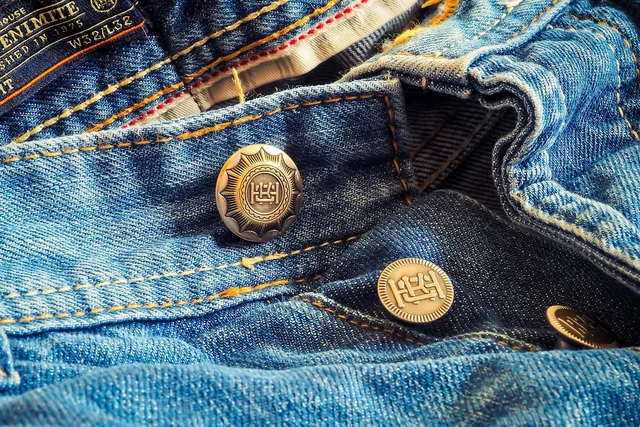
So the waistband label may carry the care instruction while the fiber content sits on a second tag in the pocket. Find both before you decide what the patch should be.
Stretch denim is a different material from rigid denim and behaves differently under a patch, which is the subject of how fabric changes the repair. Knowing the fiber content first saves a mismatched patch.
Common questions
Can a frayed hem be fixed with a patch?
Why replace a pocket bag instead of darning it?
Does a crotch repair need more than one layer?
Where does the patch go on a knee?
In this guide
- Five denim practice exercises from discarded jeans, one skill eachPractice exercises using discarded jeans, each isolating one skill for denim repair: cutting on grain, joining heavy seams, topstitching and pressing.
- Denim Repair Methods: How the Fabric Changes the RepairDenim repair methods change with the fabric: stretch denim, rigid denim, cotton shirting, linen, and wool knits each call for a different patch and stitch.
- What to add to a general mending kit for denim repair: needles, thread, awl and thimbleWhat to add to a general mending kit for denim repairs: heavier hand needles, topstitching thread, an awl or stiletto, and a thimble that fits, plus what to skip.
- Picking patch denim and thread for a jeans repairPicking patch fabric for jeans: weight, stretch, color behavior and where pocket bags fit, plus the label tolerance that explains why blends never match exactly.
- Reading denim repair mistakes people make at home with a sceptical eyeThe denim-specific errors: new indigo bleeding onto the repair, oil stains set by hot washing, stiff patches, and waiting until the pale patch becomes a hole.