Features
Part of Denim repair methods by location: crotch, knee, hem, pocket
Five denim practice exercises from discarded jeans, one skill each
Practice exercises using discarded jeans, each isolating one skill for denim repair: cutting on grain, joining heavy seams, topstitching and pressing.
Denim punishes bad technique more than lighter fabric does. Seams are thick, the cloth resists a needle, and pressing takes real heat. These five projects use jeans you were going to throw out and each one isolates a single skill you will need on a real repair.
What to take away
- Practice on the jeans you are discarding, not on the pair you want to save.
- Cutting on grain matters more in denim than in most fabrics, because the twill pulls off grain badly.
- Thick seam intersections are the hard part of every denim project. Learn them early.
- Press hard and often. Unpressed denim seams stay lumpy forever.
One: cutting on grain
Cut ten four-inch squares from a leg, aligning each edge with the weave rather than with the leg seam. Then cut five more deliberately off grain. Wash all fifteen and compare. The off-grain squares will have distorted and frayed differently, which is the lesson.
On-grain vs off-grain squares
On grain
- Edge alignment
- Weave
- After wash
- Stable
- Fraying
- Even
- Patch result
- Flat
Off grain
- Edge alignment
- Leg seam
- After wash
- Distorted
- Fraying
- Different
- Patch result
- Twists
This is the whole reason a patch cut carelessly ends up twisting after a wash.
Two: joining strips, with pressed seams
Sew straight strips of denim together into a panel. The patchwork pouch extension project sheet gives a workable method on lighter fabric.
Cut strips and label with numbered masking tape to keep order. Place them right sides together. Stitch the long side with a half inch seam allowance, backstitching at each end. Press the seam allowances open.
Do the same with denim strips and you will discover the difference immediately. The seam allowance will not stay open without heat and pressure, and the backstitch at each end is what stops the join opening under load.
Three: crossing a thick seam
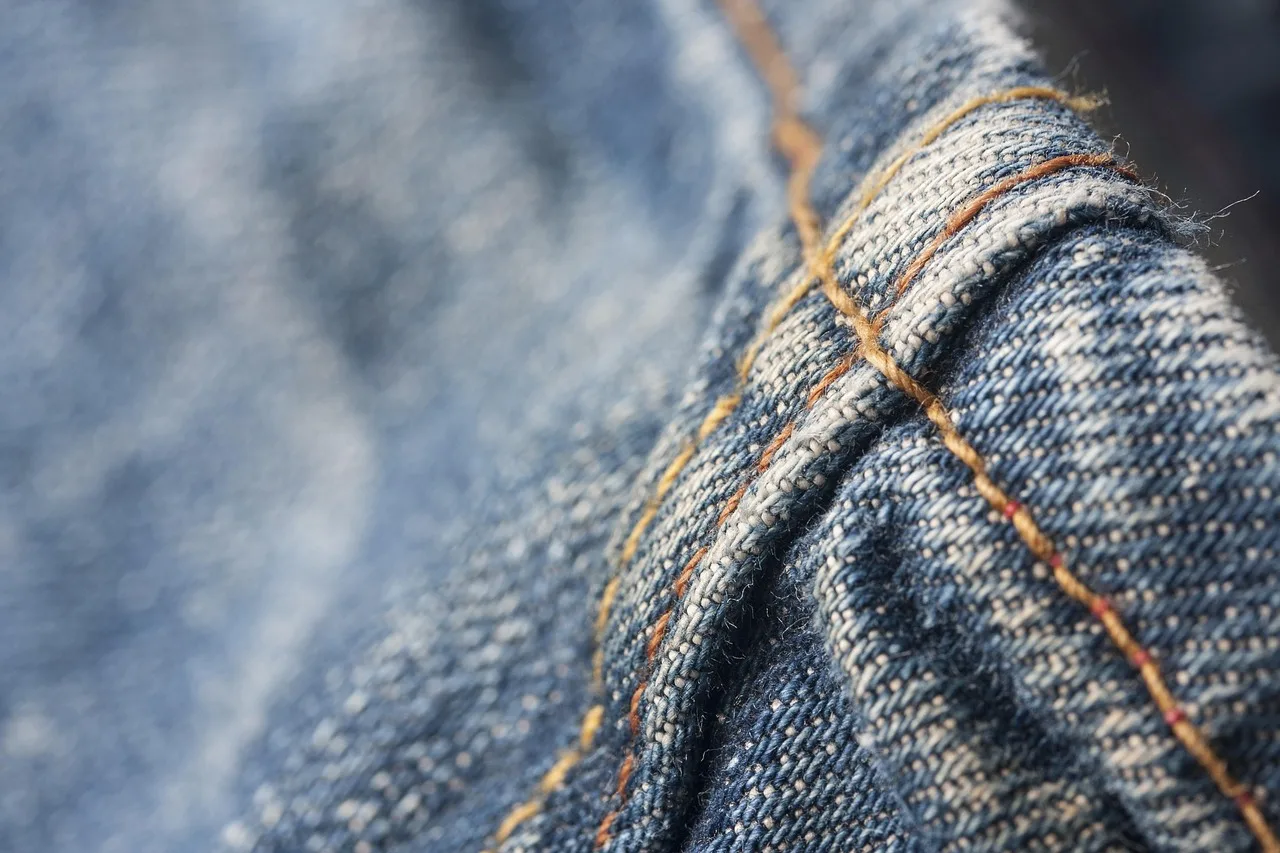
Take a leg with its felled outseam intact and sew a line of stitching across it. This is the single most common point of failure on a machine and the place a hand needle bends.
The technique is to slow down, walk the needle through by hand at the crossing, and support the back of the presser foot so it stays level. Do it ten times.
Four: topstitching
Denim repairs are usually visible, so the stitch line is part of the result. Sew parallel lines a quarter inch apart down a leg panel and try to keep them even. Consistency is the skill and it takes repetition.
Five: reading the fiber label
Before cutting up any pair, read what it is made of. The rules on generic names of fibers to be used require the generic name of every fiber present at 5 percent or more of total fiber weight, using words like cotton, rayon, silk, linen and nylon.
So a pair labeled 98 percent cotton and 2 percent elastane tells you the elastane is below the threshold at which a generic name would be required, and it was disclosed anyway because it matters functionally. Sort your donor jeans by what the label says, because rigid and stretch denim are not interchangeable as patch material.
Once these five are comfortable, the method comparison will read as a set of choices rather than a list, and the material questions become the interesting part.